


The Brand Identity Design Process, Step by Step
The Brand Identity Design Process, Step by Step
The Brand Identity Design Process, Step by Step
Published
Published
August 06, 2026
August 06, 2026
Read time
Read time
8 min
8 min
The Seven Stages at a Glance
The Seven Stages at a Glance
The Seven Stages at a Glance
A structured brand identity design process turns business strategy into a clear, consistent identity that can work across real customer touchpoints. While every project differs, most successful identity projects follow seven core stages:
Discovery and Brand Strategy — Define the strategic foundation.
Research and Competitive Audit — Understand the category landscape.
Concept Development and Moodboards — Explore distinct creative directions.
Identity Design and System Build — Create the complete visual system.
Refinement and Sign-off — Refine, approve, and finalise.
Brand Guidelines — Document rules and applications.
Handoff and Launch — Deliver assets and roll out.
A typical brand identity project timeline can range from several weeks to a few months. The biggest variables are research depth, number of stakeholders, and how efficiently feedback and revision rounds are managed.
The client also has a role throughout the process: providing information, joining workshops, giving consolidated feedback, approving key decisions, and completing formal sign-off at agreed stages.
These brand design process stages create a clear path from initial strategy to a brand that is ready to launch and use consistently.
A structured brand identity design process turns business strategy into a clear, consistent identity that can work across real customer touchpoints. While every project differs, most successful identity projects follow seven core stages:
Discovery and Brand Strategy — Define the strategic foundation.
Research and Competitive Audit — Understand the category landscape.
Concept Development and Moodboards — Explore distinct creative directions.
Identity Design and System Build — Create the complete visual system.
Refinement and Sign-off — Refine, approve, and finalise.
Brand Guidelines — Document rules and applications.
Handoff and Launch — Deliver assets and roll out.
A typical brand identity project timeline can range from several weeks to a few months. The biggest variables are research depth, number of stakeholders, and how efficiently feedback and revision rounds are managed.
The client also has a role throughout the process: providing information, joining workshops, giving consolidated feedback, approving key decisions, and completing formal sign-off at agreed stages.
These brand design process stages create a clear path from initial strategy to a brand that is ready to launch and use consistently.
Before You Start: What to Prepare
Before You Start: What to Prepare
Before You Start: What to Prepare
Understanding how brand identity design works starts before the first workshop. A well-prepared project moves faster because the design team spends less time chasing information or resolving unclear responsibilities.
Understanding how brand identity design works starts before the first workshop. A well-prepared project moves faster because the design team spends less time chasing information or resolving unclear responsibilities.
Prepare a Written Brief
Prepare a Written Brief
Prepare a Written Brief
Create a brief explaining the business, audience, objectives, current challenges, required deliverables, and what success should look like.
The brief does not need to contain all the answers. Its purpose is to give the project a clear starting point and identify questions that need further research.
Create a brief explaining the business, audience, objectives, current challenges, required deliverables, and what success should look like.
The brief does not need to contain all the answers. Its purpose is to give the project a clear starting point and identify questions that need further research.
Name the Decision-Maker
Name the Decision-Maker
Name the Decision-Maker
Decide who has final approval and who needs to contribute feedback.
A large stakeholder group can still work, but responsibility should be clear. One named decision-maker helps prevent conflicting feedback from delaying the project.
Decide who has final approval and who needs to contribute feedback.
A large stakeholder group can still work, but responsibility should be clear. One named decision-maker helps prevent conflicting feedback from delaying the project.
Audit Existing Brand Assets
Audit Existing Brand Assets
Audit Existing Brand Assets
Collect your current logos, guidelines, presentations, website assets, campaign materials, photography, packaging, templates, and other relevant files.
This inventory shows what already exists, what still works, and what needs to change.
Collect your current logos, guidelines, presentations, website assets, campaign materials, photography, packaging, templates, and other relevant files.
This inventory shows what already exists, what still works, and what needs to change.
Set the Budget and Launch Date
Set the Budget and Launch Date
Set the Budget and Launch Date
Agree on a realistic budget range and communicate any fixed launch date before work begins.
A fixed launch may affect research depth, approval schedules, production, and rollout planning, so it should never appear halfway through the project.
Agree on a realistic budget range and communicate any fixed launch date before work begins.
A fixed launch may affect research depth, approval schedules, production, and rollout planning, so it should never appear halfway through the project.
Provide Access to Customers
Provide Access to Customers
Provide Access to Customers
Where possible, give the design team access to customer interviews, sales calls, reviews, support feedback, or existing research.
Direct customer evidence makes strategy stronger than assumptions alone.
Preparation is one of the most overlooked steps to create a brand identity. Clear inputs and decision-making responsibilities give the project a stronger foundation before creative work begins.
Where possible, give the design team access to customer interviews, sales calls, reviews, support feedback, or existing research.
Direct customer evidence makes strategy stronger than assumptions alone.
Preparation is one of the most overlooked steps to create a brand identity. Clear inputs and decision-making responsibilities give the project a stronger foundation before creative work begins.
Stage 1: Discovery and Brand Strategy
Stage 1: Discovery and Brand Strategy
Stage 1: Discovery and Brand Strategy
The first stage of the brand identity design process establishes what the identity needs to communicate before deciding what it should look like.
The first stage of the brand identity design process establishes what the identity needs to communicate before deciding what it should look like.
What Happens
What Happens
What Happens
Discovery typically begins with stakeholder interviews or workshops involving founders, leadership, marketing, product, sales, or other relevant teams.
The goal is to understand the business from several angles: its objectives, audience, offer, competitive position, current perception, and future direction.
Customer research may also be included. Interviews, surveys, reviews, sales conversations, and support feedback can reveal how customers describe the business and what they genuinely value.
The strategy work then brings these inputs together to clarify positioning, audience priorities, differentiators, and desired brand attributes.
Discovery typically begins with stakeholder interviews or workshops involving founders, leadership, marketing, product, sales, or other relevant teams.
The goal is to understand the business from several angles: its objectives, audience, offer, competitive position, current perception, and future direction.
Customer research may also be included. Interviews, surveys, reviews, sales conversations, and support feedback can reveal how customers describe the business and what they genuinely value.
The strategy work then brings these inputs together to clarify positioning, audience priorities, differentiators, and desired brand attributes.
Typical Duration
Typical Duration
Typical Duration
Discovery and strategy may take approximately one to three weeks depending on company size, research requirements, and stakeholder availability.
More complex organisations may need longer when several markets, products, or audiences are involved.
Discovery and strategy may take approximately one to three weeks depending on company size, research requirements, and stakeholder availability.
More complex organisations may need longer when several markets, products, or audiences are involved.
Deliverables
Deliverables
Deliverables
This stage commonly produces:
A clear positioning statement
Primary audience definition
Key differentiators
Brand attributes or principles
Strategic creative direction
These outputs create criteria for evaluating design later. Instead of asking whether someone personally likes a concept, the team can ask whether it supports the agreed positioning and audience.
This stage commonly produces:
A clear positioning statement
Primary audience definition
Key differentiators
Brand attributes or principles
Strategic creative direction
These outputs create criteria for evaluating design later. Instead of asking whether someone personally likes a concept, the team can ask whether it supports the agreed positioning and audience.
Common Pitfall
Common Pitfall
Common Pitfall
The biggest mistake is treating discovery as a formality.
Sending a junior proxy to important workshops or rushing through strategy to reach the logo stage can leave designers making major decisions from incomplete information.
Strong identity work begins with direct access to people who understand the business and have authority to shape its direction.
The biggest mistake is treating discovery as a formality.
Sending a junior proxy to important workshops or rushing through strategy to reach the logo stage can leave designers making major decisions from incomplete information.
Strong identity work begins with direct access to people who understand the business and have authority to shape its direction.
Stage 2: Research and Competitive Audit
Stage 2: Research and Competitive Audit
Stage 2: Research and Competitive Audit
Once the strategic foundation is established, the next stage examines the environment in which the brand needs to compete.
A competitive audit reviews both direct competitors and adjacent brands that compete for similar attention, customers, or perceptions.
Once the strategic foundation is established, the next stage examines the environment in which the brand needs to compete.
A competitive audit reviews both direct competitors and adjacent brands that compete for similar attention, customers, or perceptions.
What Happens
What Happens
What Happens
The design team analyses how competitors present themselves visually and verbally. The objective is not simply to collect logos. It is to identify patterns across the category.
This process maps common conventions: colours everyone uses, similar logo structures, repeated claims, familiar typography, photography styles, packaging approaches, or interface patterns.
The team then looks for whitespace—areas where the brand can behave differently without becoming inappropriate for its category.
The design team analyses how competitors present themselves visually and verbally. The objective is not simply to collect logos. It is to identify patterns across the category.
This process maps common conventions: colours everyone uses, similar logo structures, repeated claims, familiar typography, photography styles, packaging approaches, or interface patterns.
The team then looks for whitespace—areas where the brand can behave differently without becoming inappropriate for its category.
Typical Duration
Typical Duration
Typical Duration
A focused audit may take several days to a week. Larger categories or international projects may require deeper research.
A focused audit may take several days to a week. Larger categories or international projects may require deeper research.
Deliverables
Deliverables
Deliverables
The main deliverable is usually an audit document summarising:
Direct and adjacent competitors
Visual and verbal conventions
Areas of similarity
Distinctive competitors
Opportunities for differentiation
Implications for the upcoming concept direction
The audit provides evidence for creative decisions. Instead of choosing a direction simply because it looks different, the team can explain why that difference is strategically useful.
The main deliverable is usually an audit document summarising:
Direct and adjacent competitors
Visual and verbal conventions
Areas of similarity
Distinctive competitors
Opportunities for differentiation
Implications for the upcoming concept direction
The audit provides evidence for creative decisions. Instead of choosing a direction simply because it looks different, the team can explain why that difference is strategically useful.
Common Pitfall
Common Pitfall
Common Pitfall
Research should not become imitation. Competitors are studied to understand the category, not to create a slightly modified version of what already exists.
Research should not become imitation. Competitors are studied to understand the category, not to create a slightly modified version of what already exists.
Stage 3: Concept Development and Moodboards
Stage 3: Concept Development and Moodboards
Stage 3: Concept Development and Moodboards
Once strategy and research are complete, the brand identity design process moves into creative exploration. The goal is not to start drawing logos immediately, but to establish which visual direction best expresses the agreed positioning.
Once strategy and research are complete, the brand identity design process moves into creative exploration. The goal is not to start drawing logos immediately, but to establish which visual direction best expresses the agreed positioning.
What Happens
What Happens
What Happens
The design team usually develops two or three distinct creative territories. Each should represent a genuinely different concept direction, rather than minor variations of the same idea.
A moodboard may explore typography, colour, photography, illustration, composition, texture, and graphic references. Together, these elements show how a direction could feel before significant time is invested in building the full identity.
Moodboards come before detailed logo exploration because they allow teams to agree on the broader visual language first. This reduces the risk of developing a strong logo that later feels disconnected from the rest of the system.
The design team usually develops two or three distinct creative territories. Each should represent a genuinely different concept direction, rather than minor variations of the same idea.
A moodboard may explore typography, colour, photography, illustration, composition, texture, and graphic references. Together, these elements show how a direction could feel before significant time is invested in building the full identity.
Moodboards come before detailed logo exploration because they allow teams to agree on the broader visual language first. This reduces the risk of developing a strong logo that later feels disconnected from the rest of the system.
Typical Duration
Typical Duration
Typical Duration
Concept development generally takes one to two weeks, depending on the number of directions, complexity of the brief, and feedback schedule.
Concept development generally takes one to two weeks, depending on the number of directions, complexity of the brief, and feedback schedule.
Deliverables
Deliverables
Deliverables
The stage should end with:
Two or three distinct creative territories
Supporting moodboards
Strategic rationale for each direction
A selected direction for development
The chosen direction should be documented clearly enough to guide the next stage.
The stage should end with:
Two or three distinct creative territories
Supporting moodboards
Strategic rationale for each direction
A selected direction for development
The chosen direction should be documented clearly enough to guide the next stage.
Common Pitfall
Common Pitfall
Common Pitfall
Feedback based entirely on personal taste can weaken this stage.
Instead of saying, “I don't like this colour,” ask whether the direction fits the positioning, communicates the right attributes, and distinguishes the brand appropriately.
Useful feedback evaluates strategic fit first. Once the concept direction is agreed, the team can develop it into a complete identity system.
Feedback based entirely on personal taste can weaken this stage.
Instead of saying, “I don't like this colour,” ask whether the direction fits the positioning, communicates the right attributes, and distinguishes the brand appropriately.
Useful feedback evaluates strategic fit first. Once the concept direction is agreed, the team can develop it into a complete identity system.
Stage 4: Identity Design and System Build
Stage 4: Identity Design and System Build
Stage 4: Identity Design and System Build
This is where the selected creative direction becomes a working identity.
One of the most important steps to create a brand identity is moving beyond individual assets and building a system that performs consistently across different applications.
This is where the selected creative direction becomes a working identity.
One of the most important steps to create a brand identity is moving beyond individual assets and building a system that performs consistently across different applications.
What Happens
What Happens
What Happens
The design team typically begins developing the logo suite. This may include a primary logo, secondary lockups, icon or monogram, and monochrome or reversed versions.
The colour system is developed alongside it. Primary, secondary, and functional colours should have clear roles, with accessibility considered during development rather than checked only at the end.
Typography is then structured into a practical system. This includes primary and secondary typefaces, hierarchy, weights, sizes, and the roles each style performs.
The wider identity may also include:
Photography and imagery direction
Illustration
Iconography
Graphic devices and patterns
Layout principles
Motion principles where relevant
The design team typically begins developing the logo suite. This may include a primary logo, secondary lockups, icon or monogram, and monochrome or reversed versions.
The colour system is developed alongside it. Primary, secondary, and functional colours should have clear roles, with accessibility considered during development rather than checked only at the end.
Typography is then structured into a practical system. This includes primary and secondary typefaces, hierarchy, weights, sizes, and the roles each style performs.
The wider identity may also include:
Photography and imagery direction
Illustration
Iconography
Graphic devices and patterns
Layout principles
Motion principles where relevant
Test the System on Real Touchpoints
Test the System on Real Touchpoints
Test the System on Real Touchpoints
An identity should not be approved only through isolated logo presentations or idealised mockups.
Test it against the places customers will actually experience the brand: a website page, packaging, presentation deck, social post, advertisement, product interface, or other important touchpoint.
These applications reveal whether the system has enough flexibility to work outside the presentation.
An identity should not be approved only through isolated logo presentations or idealised mockups.
Test it against the places customers will actually experience the brand: a website page, packaging, presentation deck, social post, advertisement, product interface, or other important touchpoint.
These applications reveal whether the system has enough flexibility to work outside the presentation.
Typical Duration
Typical Duration
Typical Duration
Identity development commonly takes two to four weeks, depending on the number of elements and applications required.
Identity development commonly takes two to four weeks, depending on the number of elements and applications required.
Deliverables
Deliverables
Deliverables
By the end of this stage, the project should have a developed visual identity system and enough real-world applications to demonstrate how its elements work together.
By the end of this stage, the project should have a developed visual identity system and enough real-world applications to demonstrate how its elements work together.
Common Pitfall
Common Pitfall
Common Pitfall
Focusing too heavily on the logo can leave everything else underdeveloped. A successful identity needs colour, typography, imagery, and supporting elements to work together consistently—not one strong asset surrounded by undefined decisions.
Focusing too heavily on the logo can leave everything else underdeveloped. A successful identity needs colour, typography, imagery, and supporting elements to work together consistently—not one strong asset surrounded by undefined decisions.
Stage 5: Refinement and Sign-off
Stage 5: Refinement and Sign-off
Stage 5: Refinement and Sign-off
Once the identity system has been presented, the project moves into refinement. This stage turns structured feedback into final decisions without reopening the entire creative process.
Once the identity system has been presented, the project moves into refinement. This stage turns structured feedback into final decisions without reopening the entire creative process.
How Revision Rounds Work
How Revision Rounds Work
How Revision Rounds Work
Most projects include a defined number of revision rounds.
A round normally means the client reviews the presented work, consolidates feedback, and sends one complete response. The design team then addresses that feedback before presenting the next version.
Small changes within an agreed direction are different from requesting a completely new creative direction. The latter may change the scope, timeline, and project fee.
Most projects include a defined number of revision rounds.
A round normally means the client reviews the presented work, consolidates feedback, and sends one complete response. The design team then addresses that feedback before presenting the next version.
Small changes within an agreed direction are different from requesting a completely new creative direction. The latter may change the scope, timeline, and project fee.
Consolidate Stakeholder Feedback
Consolidate Stakeholder Feedback
Consolidate Stakeholder Feedback
When several stakeholders are involved, feedback should be combined before it reaches the design team.
For example, one stakeholder asking for a more minimal approach while another requests additional decorative elements creates conflicting instructions. Internal alignment should happen before feedback is submitted.
When several stakeholders are involved, feedback should be combined before it reaches the design team.
For example, one stakeholder asking for a more minimal approach while another requests additional decorative elements creates conflicting instructions. Internal alignment should happen before feedback is submitted.
Manage Scope Creep Clearly
Manage Scope Creep Clearly
Manage Scope Creep Clearly
Scope creep occurs when new requirements are added beyond the agreed scope of work.
This might include additional logo concepts, new packaging formats, extra templates, or a new audience that was not part of the original brief.
The fair approach is to identify the additional requirement, explain its impact, and agree on any changes to cost or timeline before work continues.
Scope creep occurs when new requirements are added beyond the agreed scope of work.
This might include additional logo concepts, new packaging formats, extra templates, or a new audience that was not part of the original brief.
The fair approach is to identify the additional requirement, explain its impact, and agree on any changes to cost or timeline before work continues.
What Sign-off Covers
What Sign-off Covers
What Sign-off Covers
Formal sign-off should confirm that the agreed identity system has been approved. This normally covers the logo suite, colours, typography, supporting visual elements, and key applications included in scope.
Sign-off creates a clear point from which final guidelines and production assets can be prepared.
Formal sign-off should confirm that the agreed identity system has been approved. This normally covers the logo suite, colours, typography, supporting visual elements, and key applications included in scope.
Sign-off creates a clear point from which final guidelines and production assets can be prepared.

Stage 6: Brand Guidelines
Stage 6: Brand Guidelines
Stage 6: Brand Guidelines
A brand identity is only useful at scale if other people know how to apply it.
That is why guidelines are an essential stage of the brand identity design process, not an administrative document added after the creative work is finished.
A brand identity is only useful at scale if other people know how to apply it.
That is why guidelines are an essential stage of the brand identity design process, not an administrative document added after the creative work is finished.
What Gets Documented
What Gets Documented
What Gets Documented
Brand guidelines commonly cover:
Logo variants and usage
Clear space and minimum sizes
Incorrect logo applications
Colour values and combinations
Typography and hierarchy
Imagery direction
Illustration and iconography
Graphic devices and layouts
Voice and tone where included
Applied examples
Documentation forces the design team to define how the system behaves beyond the examples already created. In that sense, writing guidelines is part of designing the system itself.
Brand guidelines commonly cover:
Logo variants and usage
Clear space and minimum sizes
Incorrect logo applications
Colour values and combinations
Typography and hierarchy
Imagery direction
Illustration and iconography
Graphic devices and layouts
Voice and tone where included
Applied examples
Documentation forces the design team to define how the system behaves beyond the examples already created. In that sense, writing guidelines is part of designing the system itself.
PDF, Portal or Both
PDF, Portal or Both
PDF, Portal or Both
Smaller organisations may only need a clear PDF brand book. Larger or frequently changing brands may benefit from a living online portal where guidelines and assets can be updated centrally.
A hybrid approach can also work: the portal remains the current source of truth while a PDF is available for external suppliers and offline use.
Smaller organisations may only need a clear PDF brand book. Larger or frequently changing brands may benefit from a living online portal where guidelines and assets can be updated centrally.
A hybrid approach can also work: the portal remains the current source of truth while a PDF is available for external suppliers and offline use.
Include Practical Templates
Include Practical Templates
Include Practical Templates
Guidelines become more useful when supported by templates for frequently produced materials.
These might include presentation decks, social assets, documents, email signatures, or campaign layouts.
Guidelines become more useful when supported by templates for frequently produced materials.
These might include presentation decks, social assets, documents, email signatures, or campaign layouts.
Common Pitfall
Common Pitfall
Common Pitfall
The mistake is documenting an idealised identity without explaining everyday applications.
Good guidelines should allow a designer, employee, freelancer, printer, or agency that was not involved in the original project to create new work confidently and consistently.
This stage prepares the identity for the final handoff and launch, where ownership moves from the design team into everyday use.
The mistake is documenting an idealised identity without explaining everyday applications.
Good guidelines should allow a designer, employee, freelancer, printer, or agency that was not involved in the original project to create new work confidently and consistently.
This stage prepares the identity for the final handoff and launch, where ownership moves from the design team into everyday use.
Stage 7: Handoff and Launch
Stage 7: Handoff and Launch
Stage 7: Handoff and Launch
The final stage of the brand identity design process moves the identity from an approved design system into everyday use. A strong handoff ensures the client has the right files, documentation, and knowledge to manage the brand confidently after the project ends.
The final stage of the brand identity design process moves the identity from an approved design system into everyday use. A strong handoff ensures the client has the right files, documentation, and knowledge to manage the brand confidently after the project ends.
What Happens
What Happens
What Happens
The design team prepares the complete asset package. Depending on the project, this may include:
Final logo suite and approved variants
Vector and raster logo files
Colour specifications
Typography information and licences
Icons, illustrations, and graphic assets
Templates
Brand guidelines
Editable source files where included
A structured asset library
A handoff call should walk the client through the package, explaining where files are located, which formats to use, and how the guidelines should be applied.
The design team prepares the complete asset package. Depending on the project, this may include:
Final logo suite and approved variants
Vector and raster logo files
Colour specifications
Typography information and licences
Icons, illustrations, and graphic assets
Templates
Brand guidelines
Editable source files where included
A structured asset library
A handoff call should walk the client through the package, explaining where files are located, which formats to use, and how the guidelines should be applied.
Plan the Launch in Stages
Plan the Launch in Stages
Plan the Launch in Stages
A brand launch should follow a planned sequence rather than changing every touchpoint without coordination.
Start internally so employees understand the new identity and have access to approved assets. Next, update owned channels such as the website, product, email, and social profiles. Paid campaigns, packaging, signage, and print materials can then follow according to the rollout plan.
If the project includes a new brand name, domain, or URL structure, digital migration also needs careful planning. Redirects, metadata, business listings, internal links, and other SEO considerations should be addressed before launch.
A brand launch should follow a planned sequence rather than changing every touchpoint without coordination.
Start internally so employees understand the new identity and have access to approved assets. Next, update owned channels such as the website, product, email, and social profiles. Paid campaigns, packaging, signage, and print materials can then follow according to the rollout plan.
If the project includes a new brand name, domain, or URL structure, digital migration also needs careful planning. Redirects, metadata, business listings, internal links, and other SEO considerations should be addressed before launch.
Typical Duration
Typical Duration
Typical Duration
Handoff and initial rollout may take one to several weeks depending on the number of touchpoints and the complexity of the organisation.
Handoff and initial rollout may take one to several weeks depending on the number of touchpoints and the complexity of the organisation.
Post-Launch Review
Post-Launch Review
Post-Launch Review
Schedule a review approximately 60 to 90 days after launch. This gives the team enough time to identify unclear guidelines, missing assets, or inconsistent applications in real-world use.
The project does not truly succeed at sign-off. It succeeds when the identity works consistently after other people begin using it.
Schedule a review approximately 60 to 90 days after launch. This gives the team enough time to identify unclear guidelines, missing assets, or inconsistent applications in real-world use.
The project does not truly succeed at sign-off. It succeeds when the identity works consistently after other people begin using it.
How Long Does the Whole Process Take?
How Long Does the Whole Process Take?
How Long Does the Whole Process Take?
A realistic brand identity project timeline depends on the scale of the business, depth of research, number of deliverables, and speed of decision-making.
Typical ranges might look like this:
A realistic brand identity project timeline depends on the scale of the business, depth of research, number of deliverables, and speed of decision-making.
Typical ranges might look like this:
Project Size
Project Size
Typical Timeline
Typical Timeline
Common Scope
Common Scope
Focused identity
4–6 weeks
Small team, clear strategy, limited applications
Standard identity project
6–10 weeks
Strategy, research, full identity and guidelines
Complex brand project
10–16+ weeks
Multiple stakeholders, research, extensive system and rollout
Project Size
Typical Timeline
Common Scope
Focused identity
4–6 weeks
Small team, clear strategy, limited applications
Standard identity project
6–10 weeks
Strategy, research, full identity and guidelines
Complex brand project
10–16+ weeks
Multiple stakeholders, research, extensive system and rollout
These are planning ranges rather than fixed promises. Three variables have the greatest impact.
Stakeholder count: More stakeholders usually mean more interviews, discussions, and approval stages. This becomes particularly significant when different departments or leadership teams need to reach agreement.
Research depth: Customer interviews, international research, a detailed competitive audit, or complex positioning work requires time that should not be compressed simply to reach visual design sooner.
Revision discipline: Clear, consolidated feedback keeps revision rounds moving. Fragmented or contradictory feedback can extend a project considerably.
Some parts of the process can move faster. Meetings can be scheduled efficiently, approvals can have fixed deadlines, and production tasks can sometimes run in parallel.
Other parts should not be rushed. Discovery, strategic decisions, meaningful concept development, and stakeholder alignment need enough time to produce useful outcomes.
Understanding how brand identity design works means recognising that speed alone is not the goal. A good process creates enough structure to make informed decisions without adding unnecessary stages.
These are planning ranges rather than fixed promises. Three variables have the greatest impact.
Stakeholder count: More stakeholders usually mean more interviews, discussions, and approval stages. This becomes particularly significant when different departments or leadership teams need to reach agreement.
Research depth: Customer interviews, international research, a detailed competitive audit, or complex positioning work requires time that should not be compressed simply to reach visual design sooner.
Revision discipline: Clear, consolidated feedback keeps revision rounds moving. Fragmented or contradictory feedback can extend a project considerably.
Some parts of the process can move faster. Meetings can be scheduled efficiently, approvals can have fixed deadlines, and production tasks can sometimes run in parallel.
Other parts should not be rushed. Discovery, strategic decisions, meaningful concept development, and stakeholder alignment need enough time to produce useful outcomes.
Understanding how brand identity design works means recognising that speed alone is not the goal. A good process creates enough structure to make informed decisions without adding unnecessary stages.
What Makes a Brand Identity Project Fail
What Makes a Brand Identity Project Fail
What Makes a Brand Identity Project Fail
Even a well-planned brand identity design process can break down when responsibilities, strategy, or implementation are unclear.
Even a well-planned brand identity design process can break down when responsibilities, strategy, or implementation are unclear.
No Named Decision-Maker
No Named Decision-Maker
No Named Decision-Maker
Projects become difficult when everyone can give feedback but nobody has final authority.
Choose one decision-maker and define the approval group before work starts. Stakeholders can contribute, but someone needs responsibility for resolving conflicting opinions.
Projects become difficult when everyone can give feedback but nobody has final authority.
Choose one decision-maker and define the approval group before work starts. Stakeholders can contribute, but someone needs responsibility for resolving conflicting opinions.
Strategy Is Skipped or Rushed
Strategy Is Skipped or Rushed
Strategy Is Skipped or Rushed
Moving directly into visual design may feel faster, but it removes the criteria needed to judge the work.
Without positioning, audience understanding, and clear objectives, feedback often becomes subjective: which logo someone likes, which colour feels better, or which direction looks more exciting.
Moving directly into visual design may feel faster, but it removes the criteria needed to judge the work.
Without positioning, audience understanding, and clear objectives, feedback often becomes subjective: which logo someone likes, which colour feels better, or which direction looks more exciting.
Feedback Comes From a Committee
Feedback Comes From a Committee
Feedback Comes From a Committee
Multiple perspectives can improve a project, but unfiltered feedback creates conflicting instructions.
Collect stakeholder comments internally, resolve disagreements, and provide one consolidated response for each round.
Multiple perspectives can improve a project, but unfiltered feedback creates conflicting instructions.
Collect stakeholder comments internally, resolve disagreements, and provide one consolidated response for each round.
There Is No Documentation
There Is No Documentation
There Is No Documentation
A strong identity can quickly become inconsistent when nobody documents how to use it.
Without clear guidelines, teams begin creating their own logo applications, colours, typography combinations, and layouts. Over time, the system loses the consistency it was designed to create.
A strong identity can quickly become inconsistent when nobody documents how to use it.
Without clear guidelines, teams begin creating their own logo applications, colours, typography combinations, and layouts. Over time, the system loses the consistency it was designed to create.
There Is No Rollout Plan
There Is No Rollout Plan
There Is No Rollout Plan
Finishing the design is not the same as launching the brand.
Without a coordinated launch, customers may encounter the old identity on one channel and the new identity on another. Internal teams and external suppliers may also continue using outdated assets.
The strongest steps to create a brand identity therefore extend beyond creative design. Clear strategy, defined responsibilities, disciplined feedback, practical documentation, and an organised rollout all contribute to whether the identity succeeds after launch.
Finishing the design is not the same as launching the brand.
Without a coordinated launch, customers may encounter the old identity on one channel and the new identity on another. Internal teams and external suppliers may also continue using outdated assets.
The strongest steps to create a brand identity therefore extend beyond creative design. Clear strategy, defined responsibilities, disciplined feedback, practical documentation, and an organised rollout all contribute to whether the identity succeeds after launch.
FAQ
FAQ
FAQ
What are the stages of the brand identity design process?
What are the stages of the brand identity design process?
What are the stages of the brand identity design process?
Discovery and strategy, competitive research and audit, concept development, identity design and system build, refinement and sign-off, brand guidelines, and handoff and launch.
Discovery and strategy, competitive research and audit, concept development, identity design and system build, refinement and sign-off, brand guidelines, and handoff and launch.
How long does the brand identity design process take?
How long does the brand identity design process take?
How long does the brand identity design process take?
Four to ten weeks for most projects. Timeline is driven mainly by how many stakeholders must approve, how deep the research goes, and how disciplined the feedback rounds are.
Four to ten weeks for most projects. Timeline is driven mainly by how many stakeholders must approve, how deep the research goes, and how disciplined the feedback rounds are.
What should I prepare before a brand identity project starts?
What should I prepare before a brand identity project starts?
What should I prepare before a brand identity project starts?
A written brief, a single named decision-maker, an inventory of existing assets, a realistic budget range, and access to customers or sales conversations for research.
A written brief, a single named decision-maker, an inventory of existing assets, a realistic budget range, and access to customers or sales conversations for research.
How many revision rounds are normal?
How many revision rounds are normal?
How many revision rounds are normal?
Two to three consolidated rounds is typical. What matters more than the number is that feedback arrives consolidated from one source rather than as competing individual opinions.
Two to three consolidated rounds is typical. What matters more than the number is that feedback arrives consolidated from one source rather than as competing individual opinions.
Can the brand identity process be compressed?
Can the brand identity process be compressed?
Can the brand identity process be compressed?
Some of it. Research and concept exploration can be tightened, but strategy and stakeholder alignment cannot be rushed without producing an identity that gets rejected or reworked later.
Some of it. Research and concept exploration can be tightened, but strategy and stakeholder alignment cannot be rushed without producing an identity that gets rejected or reworked later.
How involved does the client need to be?
How involved does the client need to be?
How involved does the client need to be?
Heavily in stages 1, 3 and 5 — discovery, direction choice and sign-off. Lighter in the production stages, though timely feedback keeps the whole timeline on track.
Heavily in stages 1, 3 and 5 — discovery, direction choice and sign-off. Lighter in the production stages, though timely feedback keeps the whole timeline on track.
Recomended blogs
Recomended blogs
Recomended blogs

Brand Identity Design
Brand Identity Design
Brand Identity vs Brand Image vs Branding: The Difference
Brand Identity vs Brand Image vs Branding: The Difference
June 24, 2026 | 10 min read
June 24, 2026 | 10 min read

Packaging Design
Brand Identity Design
7 Reasons why good design is crucial for brand
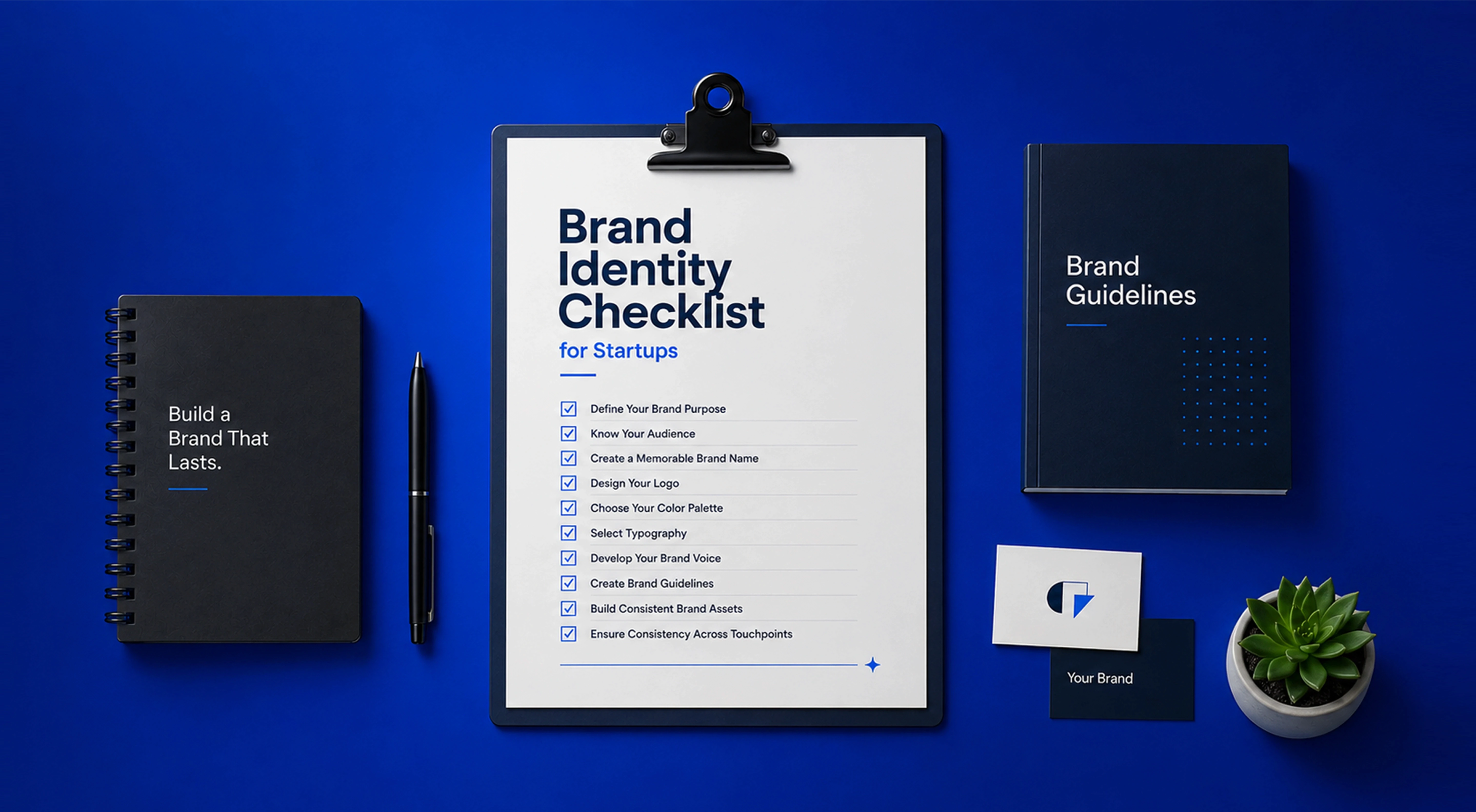
Brand Identity Checklist for Startups
June 24, 2021 | 10 min read
June 24, 2026 | 10 min read
Packaging Design
Brand Identity Design
7 Reasons why good design is crucial for brand
Choosing Brand Typography
(and Licensing It Properly)
June 24, 2021 | 10 min read
June 24, 2026 | 10 min read
Brand Identity Design
Choosing Brand Typography
(and Licensing It Properly)
June 24, 2026 | 10 min read
A strong brand identity starts with a strong process.
A strong brand identity starts with a strong process.
A strong brand identity starts with a strong process.
If you're planning a new identity and need a structured approach from discovery through design, guidelines, and handoff, explore our brand identity design services.
If you're planning a new identity and need a structured approach from discovery through design, guidelines, and handoff, explore our brand identity design services.
If you're planning a new identity and need a structured approach from discovery through design, guidelines, and handoff, explore our brand identity design services.
Get valuable strategy, culture, and brand insights straight to your inbox.
By signing up to receive emails from Abstrct Design, you agree to our Privacy Policy. We treat your info responsibly. Unsubscribe anytime.
© All rights reserved Abstrct Design - 2026
Contact Us
hello@abstrctdesign.com
To Ring
+91 98194 78752
Get valuable strategy, culture, and brand insights straight to your inbox.
By signing up to receive emails from Abstrct Design, you agree to our Privacy Policy. We treat your info responsibly. Unsubscribe anytime.
© All rights reserved Abstrct Design - 2026
Contact Us
hello@abstrctdesign.com
To Ring
+91 98194 78752
Get valuable strategy, culture, and brand insights straight to your inbox.
By signing up to receive emails from Abstrct Design, you agree to our Privacy Policy. We treat your info responsibly. Unsubscribe anytime.
© All rights reserved Abstrct Design - 2026
Contact Us
hello@abstrctdesign.com
To Ring
+91 98194 78752