
Brand Identity Checklist for Startups [Free PDF Download]
Brand Identity Checklist for Startups [Free PDF Download]
Brand Identity Checklist for Startups [Free PDF Download]
Published
Published
August 06, 2026
August 06, 2026
Read time
Read time
8 min
8 min
The Checklist at a Glance
The Checklist at a Glance
The Checklist at a Glance
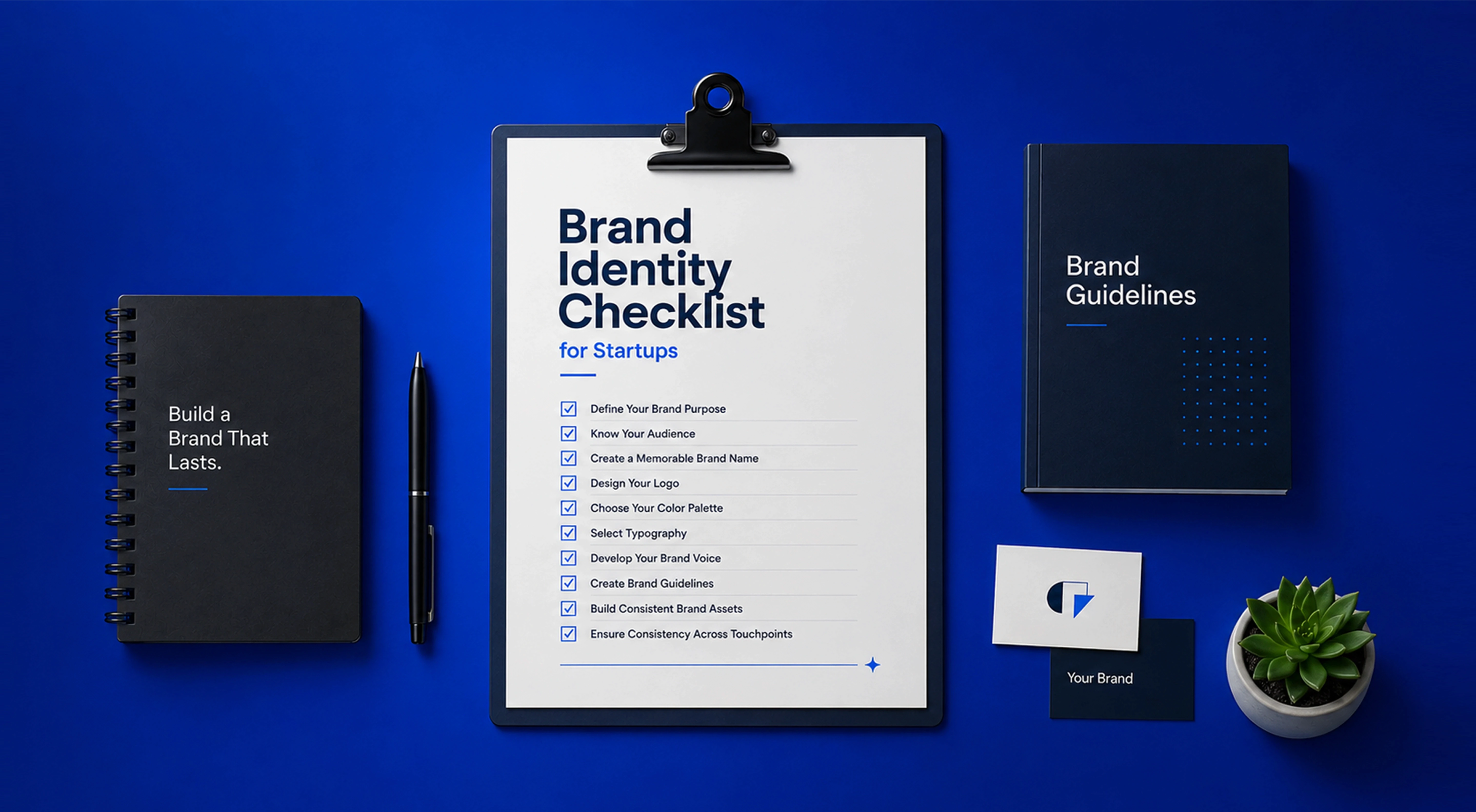
A strong brand identity checklist helps startups build their brand in the right order, from strategy through to launch. This checklist is designed for pre-launch and early-stage founders who need a clear process without overlooking important decisions.
The startup branding checklist is divided into five phases:
Phase 1: Brand Strategy Foundations — 7 items
Phase 2: Visual Identity — 8 items
Phase 3: Verbal Identity — 5 items
Phase 4: Documentation and Guidelines — 5 items
Phase 5: Launch and Rollout — 5 items
That gives you 30 practical checks covering positioning, competitive research, logo design, colour, typography, tone of voice, guidelines, and launch rollout.
Work through the phases in order. In particular, do not skip strategy and jump directly into visual design. The decisions made in Phase 1 should guide everything that follows.
Prefer a version you can save and work through? Download the free brand identity checklist PDF with tick boxes, owners, and due dates.
A strong brand identity checklist helps startups build their brand in the right order, from strategy through to launch. This checklist is designed for pre-launch and early-stage founders who need a clear process without overlooking important decisions.
The startup branding checklist is divided into five phases:
Phase 1: Brand Strategy Foundations — 7 items
Phase 2: Visual Identity — 8 items
Phase 3: Verbal Identity — 5 items
Phase 4: Documentation and Guidelines — 5 items
Phase 5: Launch and Rollout — 5 items
That gives you 30 practical checks covering positioning, competitive research, logo design, colour, typography, tone of voice, guidelines, and launch rollout.
Work through the phases in order. In particular, do not skip strategy and jump directly into visual design. The decisions made in Phase 1 should guide everything that follows.
Prefer a version you can save and work through? Download the free brand identity checklist PDF with tick boxes, owners, and due dates.
Why Startups Get Brand Identity Wrong
Why Startups Get Brand Identity Wrong
Why Startups Get Brand Identity Wrong
Startups often move quickly, which is useful for testing products but can create problems when building a brand. Many branding issues begin because decisions happen in the wrong sequence.
Startups often move quickly, which is useful for testing products but can create problems when building a brand. Many branding issues begin because decisions happen in the wrong sequence.
Designing Before Positioning
Designing Before Positioning
Designing Before Positioning
The first mistake is starting with a logo, colours, or website before deciding what the business should stand for.
Without clear positioning, designers are forced to make visual decisions without knowing exactly who the brand needs to reach, what makes it different, or what perception it should create. The result may look polished but communicate very little.
The first mistake is starting with a logo, colours, or website before deciding what the business should stand for.
Without clear positioning, designers are forced to make visual decisions without knowing exactly who the brand needs to reach, what makes it different, or what perception it should create. The result may look polished but communicate very little.
Buying a Logo and Calling It an Identity
Buying a Logo and Calling It an Identity
Buying a Logo and Calling It an Identity
A logo is only one part of a brand identity. Startups also need a logo suite, colour palette, type system, imagery direction, tone of voice, and rules for applying them consistently.
Without these supporting elements, every new website page, presentation, social post, or sales document becomes another design decision.
A logo is only one part of a brand identity. Startups also need a logo suite, colour palette, type system, imagery direction, tone of voice, and rules for applying them consistently.
Without these supporting elements, every new website page, presentation, social post, or sales document becomes another design decision.
Creating an Identity Without Documentation
Creating an Identity Without Documentation
Creating an Identity Without Documentation
A founder may know exactly how the brand should look, but that knowledge does not automatically transfer to the first marketing hire, freelancer, or agency.
Without guidelines and an organised asset library, consistency can collapse as soon as more people start creating work.
Fixing these problems later costs both time and money. Teams may need to redesign assets, rebuild templates, replace incorrectly licensed fonts, or redo marketing materials.
This brand identity checklist for founders is therefore more than a to-do list. It protects the sequence of decisions so each phase creates a stronger foundation for the next.
A founder may know exactly how the brand should look, but that knowledge does not automatically transfer to the first marketing hire, freelancer, or agency.
Without guidelines and an organised asset library, consistency can collapse as soon as more people start creating work.
Fixing these problems later costs both time and money. Teams may need to redesign assets, rebuild templates, replace incorrectly licensed fonts, or redo marketing materials.
This brand identity checklist for founders is therefore more than a to-do list. It protects the sequence of decisions so each phase creates a stronger foundation for the next.
Phase 1: Brand Strategy Foundations
Phase 1: Brand Strategy Foundations
Phase 1: Brand Strategy Foundations
Before designing anything, establish the strategic decisions that your visual and verbal identity will need to express. This is the most important phase of the brand identity checklist because weak foundations create expensive design changes later.
Before designing anything, establish the strategic decisions that your visual and verbal identity will need to express. This is the most important phase of the brand identity checklist because weak foundations create expensive design changes later.
Define the Customer You Are Actually For
Define the Customer You Are Actually For
Define the Customer You Are Actually For
Avoid broad descriptions such as “small businesses” or “modern consumers.” Define the specific customer, their problem, what they value, and why they would choose your solution.
Done when: your team can describe the primary customer clearly and make decisions based on their needs.
Avoid broad descriptions such as “small businesses” or “modern consumers.” Define the specific customer, their problem, what they value, and why they would choose your solution.
Done when: your team can describe the primary customer clearly and make decisions based on their needs.
Write a Positioning Statement You Can Defend
Write a Positioning Statement You Can Defend
Write a Positioning Statement You Can Defend
Your positioning should explain who you serve, what you offer, what makes you different, and why customers should believe that difference.
Done when: the statement is specific enough to exclude competitors rather than describing something everyone in your category could claim.
Your positioning should explain who you serve, what you offer, what makes you different, and why customers should believe that difference.
Done when: the statement is specific enough to exclude competitors rather than describing something everyone in your category could claim.
Audit Five Direct Competitors
Audit Five Direct Competitors
Audit Five Direct Competitors
Run a simple competitive audit covering at least five relevant competitors. Review their logos, colours, typography, imagery, messaging, claims, and overall positioning.
Look for repeated category conventions as well as opportunities to stand apart.
Done when: you know where competitors look and sound similar and where your brand can create meaningful distinction.
Run a simple competitive audit covering at least five relevant competitors. Review their logos, colours, typography, imagery, messaging, claims, and overall positioning.
Look for repeated category conventions as well as opportunities to stand apart.
Done when: you know where competitors look and sound similar and where your brand can create meaningful distinction.
Identify and Prove Your Point of Difference
Identify and Prove Your Point of Difference
Identify and Prove Your Point of Difference
Being different is only useful when the difference matters to customers and can be supported by evidence.
Your proof might come from your product, process, expertise, technology, pricing model, service, or customer experience.
Done when: you can state your point of difference and provide a credible reason for customers to believe it.
Being different is only useful when the difference matters to customers and can be supported by evidence.
Your proof might come from your product, process, expertise, technology, pricing model, service, or customer experience.
Done when: you can state your point of difference and provide a credible reason for customers to believe it.
Agree Brand Values That Affect Real Decisions
Agree Brand Values That Affect Real Decisions
Agree Brand Values That Affect Real Decisions
Avoid generic values that could belong to almost any company. Useful brand values should influence behaviour.
If “simplicity” is a value, for example, it should affect product decisions, communication, and customer experience—not simply appear on an About page.
Done when: each value can change a real business or brand decision.
Avoid generic values that could belong to almost any company. Useful brand values should influence behaviour.
If “simplicity” is a value, for example, it should affect product decisions, communication, and customer experience—not simply appear on an About page.
Done when: each value can change a real business or brand decision.
Confirm Name and Trademark Viability
Confirm Name and Trademark Viability
Confirm Name and Trademark Viability
Before investing heavily in an identity, check whether your preferred naming direction is practical. Review domain availability, relevant social handles, competitor conflicts, and potential trademark issues.
Formal trademark advice should come from an appropriately qualified professional where required.
Done when: the name has been checked for practical availability and appropriate trademark due diligence has been completed.
Before investing heavily in an identity, check whether your preferred naming direction is practical. Review domain availability, relevant social handles, competitor conflicts, and potential trademark issues.
Formal trademark advice should come from an appropriately qualified professional where required.
Done when: the name has been checked for practical availability and appropriate trademark due diligence has been completed.
Set the Budget and Decision-Maker
Set the Budget and Decision-Maker
Set the Budget and Decision-Maker
Define a realistic budget range before commissioning design and decide who has final approval.
Too many decision-makers can slow the project and produce conflicting feedback. Stakeholders can contribute, but final responsibility should be clear.
Done when: the budget range, project owner, key stakeholders, and final decision-maker are agreed before design begins.
Define a realistic budget range before commissioning design and decide who has final approval.
Too many decision-makers can slow the project and produce conflicting feedback. Stakeholders can contribute, but final responsibility should be clear.
Done when: the budget range, project owner, key stakeholders, and final decision-maker are agreed before design begins.
Phase 2: Visual Identity
Phase 2: Visual Identity
Phase 2: Visual Identity
Once the strategic foundation is clear, the next stage of your brand identity checklist is turning that strategy into a visual system. Every design choice should support your positioning while remaining practical across the places your startup will appear most often.
Once the strategic foundation is clear, the next stage of your brand identity checklist is turning that strategy into a visual system. Every design choice should support your positioning while remaining practical across the places your startup will appear most often.
Build a Complete Logo Suite
Build a Complete Logo Suite
Build a Complete Logo Suite
Do not stop at one primary logo. A complete logo suite should include variations for different spaces and applications, such as a primary logo, horizontal or stacked version, icon-only mark, monochrome version, reversed version, and favicon.
Done when: your logo works clearly across large, small, horizontal, vertical, light, and dark applications.
Do not stop at one primary logo. A complete logo suite should include variations for different spaces and applications, such as a primary logo, horizontal or stacked version, icon-only mark, monochrome version, reversed version, and favicon.
Done when: your logo works clearly across large, small, horizontal, vertical, light, and dark applications.
Create a Structured Colour Palette
Create a Structured Colour Palette
Create a Structured Colour Palette
Build a palette with primary, secondary, and functional colours rather than selecting several colours without defined roles. Include HEX and RGB values for digital use and CMYK or Pantone specifications where print is required.
Done when: every colour has a clear purpose and documented value.
Build a palette with primary, secondary, and functional colours rather than selecting several colours without defined roles. Include HEX and RGB values for digital use and CMYK or Pantone specifications where print is required.
Done when: every colour has a clear purpose and documented value.
Check Colour Accessibility
Check Colour Accessibility
Check Colour Accessibility
Test every important text-on-colour combination against WCAG AA contrast requirements. Pay particular attention to buttons, links, body copy, forms, and other functional elements.
Done when: essential text and interface combinations meet the required accessibility standards.
Test every important text-on-colour combination against WCAG AA contrast requirements. Pay particular attention to buttons, links, body copy, forms, and other functional elements.
Done when: essential text and interface combinations meet the required accessibility standards.
Select and Licence Your Typefaces
Select and Licence Your Typefaces
Select and Licence Your Typefaces
Choose primary and secondary typefaces that support your brand personality and remain readable across digital and print applications.
Confirm commercial licensing before rolling them out across your business.
Done when: fonts are selected, tested, legally licensed, and available to everyone who needs them.
Choose primary and secondary typefaces that support your brand personality and remain readable across digital and print applications.
Confirm commercial licensing before rolling them out across your business.
Done when: fonts are selected, tested, legally licensed, and available to everyone who needs them.
Define a Type System
Define a Type System
Define a Type System
Create rules for headings, subheadings, body copy, captions, and other recurring text styles. Define size, weight, spacing, and hierarchy.
Done when: your type system creates a consistent hierarchy without designers choosing new styles for every asset.
Create rules for headings, subheadings, body copy, captions, and other recurring text styles. Define size, weight, spacing, and hierarchy.
Done when: your type system creates a consistent hierarchy without designers choosing new styles for every asset.
Set an Imagery Direction
Set an Imagery Direction
Set an Imagery Direction
Define what your photography and imagery should look like. Consider subject matter, composition, lighting, cropping, colour treatment, and whether you will use stock or commissioned photography.
Done when: someone can select a new image and confidently judge whether it belongs to your brand.
Define what your photography and imagery should look like. Consider subject matter, composition, lighting, cropping, colour treatment, and whether you will use stock or commissioned photography.
Done when: someone can select a new image and confidently judge whether it belongs to your brand.
Choose an Icon Set
Choose an Icon Set
Choose an Icon Set
Select or commission icons with consistent stroke weights, proportions, corner styles, and visual character.
Done when: icons feel like one family and work alongside the rest of your visual identity.
Select or commission icons with consistent stroke weights, proportions, corner styles, and visual character.
Done when: icons feel like one family and work alongside the rest of your visual identity.
Test Your Three Most Important Touchpoints
Test Your Three Most Important Touchpoints
Test Your Three Most Important Touchpoints
Do not approve the identity only on presentation slides. Apply it to the three touchpoints your startup will use most, such as your website, product interface, packaging, social media, or sales deck.
Done when: the identity works in real applications, not just ideal examples.
Do not approve the identity only on presentation slides. Apply it to the three touchpoints your startup will use most, such as your website, product interface, packaging, social media, or sales deck.
Done when: the identity works in real applications, not just ideal examples.
Phase 3: Verbal Identity
Phase 3: Verbal Identity
Phase 3: Verbal Identity
A complete startup branding checklist should define how the brand sounds as clearly as how it looks. Verbal identity creates consistency across websites, sales conversations, social media, product copy, and customer support.
A complete startup branding checklist should define how the brand sounds as clearly as how it looks. Verbal identity creates consistency across websites, sales conversations, social media, product copy, and customer support.
Define Your Voice Principles
Define Your Voice Principles
Define Your Voice Principles
Choose a small number of principles that describe your tone of voice and explain what each means in practice.
Include clear do-and-do-not examples. “Confident,” for example, becomes more useful when teams understand how confident writing differs from arrogant or overly promotional writing.
Done when: another writer can create copy that sounds recognisably like your brand.
Choose a small number of principles that describe your tone of voice and explain what each means in practice.
Include clear do-and-do-not examples. “Confident,” for example, becomes more useful when teams understand how confident writing differs from arrogant or overly promotional writing.
Done when: another writer can create copy that sounds recognisably like your brand.
Map Tone by Context
Map Tone by Context
Map Tone by Context
Your voice remains consistent, but tone should adapt to the situation. A sales page, support response, error message, and social post should not necessarily sound identical.
Done when: guidelines explain how your tone changes across key customer situations without losing the brand personality.
Your voice remains consistent, but tone should adapt to the situation. A sales page, support response, error message, and social post should not necessarily sound identical.
Done when: guidelines explain how your tone changes across key customer situations without losing the brand personality.
Write Your Boilerplate and Elevator Description
Write Your Boilerplate and Elevator Description
Write Your Boilerplate and Elevator Description
Create a short standard description of the company for press releases, partner materials, profiles, and other external communications. Also prepare a simple elevator description for conversations and introductions.
Done when: your team can explain what the company does consistently without rewriting the description every time.
Create a short standard description of the company for press releases, partner materials, profiles, and other external communications. Also prepare a simple elevator description for conversations and introductions.
Done when: your team can explain what the company does consistently without rewriting the description every time.
Test Your Tagline Against Your Positioning
Test Your Tagline Against Your Positioning
Test Your Tagline Against Your Positioning
A tagline should reinforce the brand's positioning, not simply sound memorable.
Ask whether it communicates something relevant and distinctive about the business. If it could easily belong to several competitors, refine it.
Done when: the tagline supports the positioning rather than competing with or weakening it.
A tagline should reinforce the brand's positioning, not simply sound memorable.
Ask whether it communicates something relevant and distinctive about the business. If it could easily belong to several competitors, refine it.
Done when: the tagline supports the positioning rather than competing with or weakening it.
Build a Terminology List
Build a Terminology List
Build a Terminology List
Document preferred words for your products, features, customers, and services, along with terms the brand should avoid.
Done when: marketing, product, sales, and support teams use the same language for the same things.
Document preferred words for your products, features, customers, and services, along with terms the brand should avoid.
Done when: marketing, product, sales, and support teams use the same language for the same things.
Phase 4: Documentation and Guidelines
Phase 4: Documentation and Guidelines
Phase 4: Documentation and Guidelines
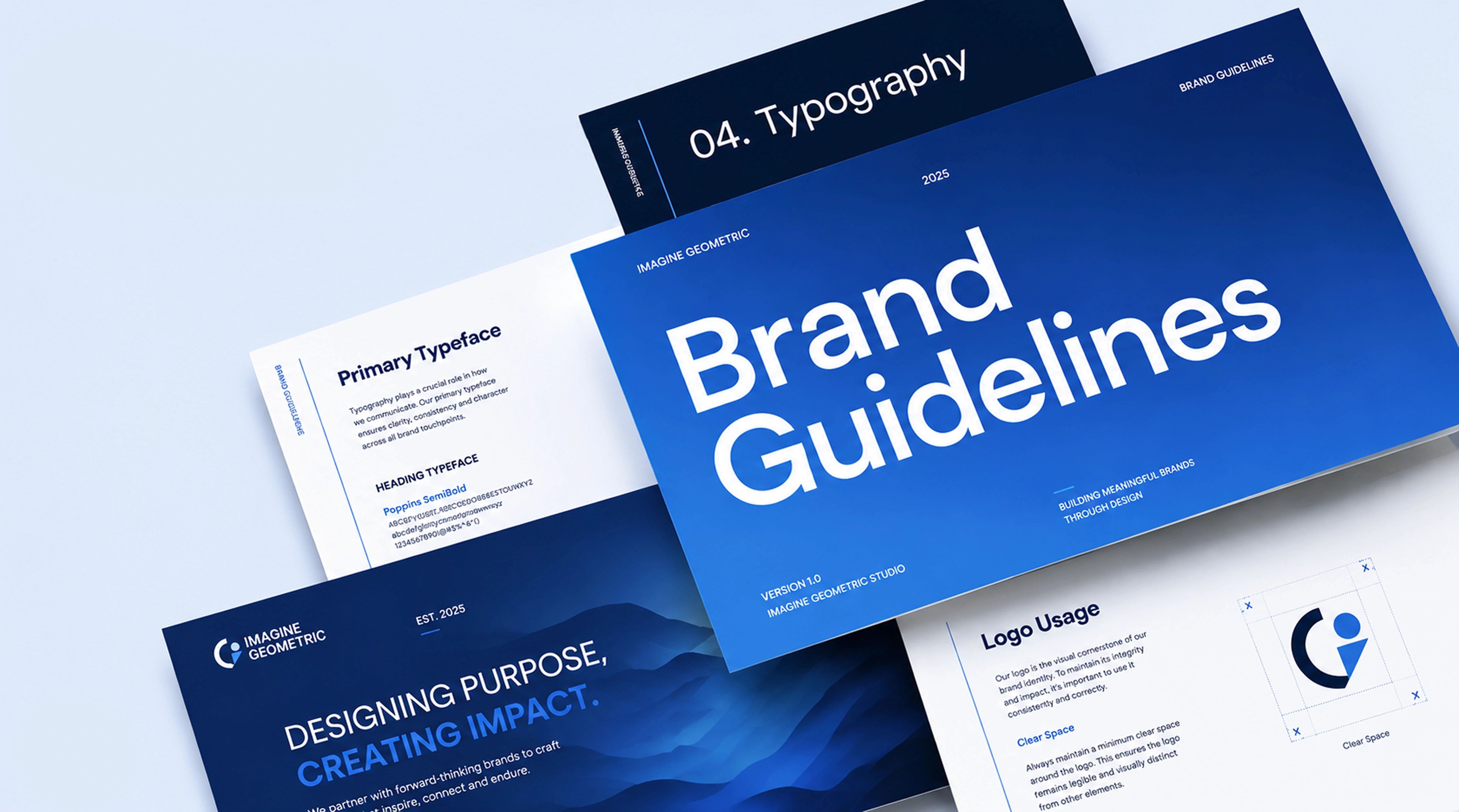
A strong identity becomes difficult to maintain if its rules exist only in the designer's head. Documentation turns your visual and verbal decisions into a system other people can use.
A strong identity becomes difficult to maintain if its rules exist only in the designer's head. Documentation turns your visual and verbal decisions into a system other people can use.
Choose the Right Guidelines Format
Choose the Right Guidelines Format
Choose the Right Guidelines Format
Decide whether you need a downloadable PDF brand book or a living online portal. A PDF can work well for a smaller startup, while a portal may be easier to maintain as the identity expands.
Done when: everyone who creates branded materials knows where to find the current guidelines.
Decide whether you need a downloadable PDF brand book or a living online portal. A PDF can work well for a smaller startup, while a portal may be easier to maintain as the identity expands.
Done when: everyone who creates branded materials knows where to find the current guidelines.
Document the Core Identity Rules
Document the Core Identity Rules
Document the Core Identity Rules
Your guidelines should cover logo usage, colour palette, type system, imagery, iconography, and tone of voice. Include correct applications as well as common mistakes to avoid.
Done when: a new designer or marketer can understand how to apply the identity without constant guidance.
Your guidelines should cover logo usage, colour palette, type system, imagery, iconography, and tone of voice. Include correct applications as well as common mistakes to avoid.
Done when: a new designer or marketer can understand how to apply the identity without constant guidance.
Build Frequently Used Templates
Build Frequently Used Templates
Build Frequently Used Templates
Create templates for the materials your team produces every week, such as social posts, presentations, proposals, documents, or email graphics.
Done when: recurring work starts from an approved structure rather than a blank file.
Create templates for the materials your team produces every week, such as social posts, presentations, proposals, documents, or email graphics.
Done when: recurring work starts from an approved structure rather than a blank file.
Create an Organised Asset Library
Create an Organised Asset Library
Create an Organised Asset Library
Set up a central, versioned asset library containing approved logos, icons, images, templates, fonts, and other brand files. Remove or archive outdated versions to prevent accidental use.
Done when: the team can quickly find the latest approved asset without asking which file is correct.
Set up a central, versioned asset library containing approved logos, icons, images, templates, fonts, and other brand files. Remove or archive outdated versions to prevent accidental use.
Done when: the team can quickly find the latest approved asset without asking which file is correct.
Record Licences in One Place
Record Licences in One Place
Record Licences in One Place
Keep font, photography, illustration, and other asset licences together with details about permitted usage and renewal requirements.
Done when: your team knows which assets it has permission to use and where the licence information is stored.
Keep font, photography, illustration, and other asset licences together with details about permitted usage and renewal requirements.
Done when: your team knows which assets it has permission to use and where the licence information is stored.
Documentation is what keeps a brand identity checklist for founders useful after launch. It allows the identity to scale beyond the people who originally created it while protecting consistency as the team grows.
Documentation is what keeps a brand identity checklist for founders useful after launch. It allows the identity to scale beyond the people who originally created it while protecting consistency as the team grows.
Phase 5: Launch and Rollout
Phase 5: Launch and Rollout
Phase 5: Launch and Rollout
The final phase of your brand identity checklist is putting the new identity into use. A successful launch is not simply publishing a new logo—it requires a planned launch rollout so every important touchpoint moves to the new system consistently.
The final phase of your brand identity checklist is putting the new identity into use. A successful launch is not simply publishing a new logo—it requires a planned launch rollout so every important touchpoint moves to the new system consistently.
Launch Internally First
Launch Internally First
Launch Internally First
Introduce the identity to your team before customers see it. Explain what changed, why it changed, where the guidelines live, and how employees should use the new assets.
Done when: your team understands the identity and has access to the correct files before the public launch.
Introduce the identity to your team before customers see it. Explain what changed, why it changed, where the guidelines live, and how employees should use the new assets.
Done when: your team understands the identity and has access to the correct files before the public launch.
Update Owned Channels Before Paid and Print
Update Owned Channels Before Paid and Print
Update Owned Channels Before Paid and Print
Sequence the rollout carefully. Start with your website, product, email, social profiles, and other owned channels. Then move to advertising, campaigns, packaging, signage, and printed materials.
Done when: high-visibility customer touchpoints use the new identity consistently.
Sequence the rollout carefully. Start with your website, product, email, social profiles, and other owned channels. Then move to advertising, campaigns, packaging, signage, and printed materials.
Done when: high-visibility customer touchpoints use the new identity consistently.
Update Profiles, Listings and Signatures
Update Profiles, Listings and Signatures
Update Profiles, Listings and Signatures
Small touchpoints are easy to overlook. Review social profiles, business listings, email signatures, presentation templates, documents, directories, and marketplace profiles.
Done when: customers are no longer regularly encountering outdated brand assets.
Small touchpoints are easy to overlook. Review social profiles, business listings, email signatures, presentation templates, documents, directories, and marketplace profiles.
Done when: customers are no longer regularly encountering outdated brand assets.
Brief Vendors and Freelancers
Brief Vendors and Freelancers
Brief Vendors and Freelancers
Give external designers, developers, printers, agencies, and other partners access to your guidelines and approved asset library.
Done when: external partners are working from the same current files and rules as your internal team.
Give external designers, developers, printers, agencies, and other partners access to your guidelines and approved asset library.
Done when: external partners are working from the same current files and rules as your internal team.
Plan Digital and SEO Changes
Plan Digital and SEO Changes
Plan Digital and SEO Changes
If your launch includes new URLs or a naming change, plan the migration before launch. Set appropriate redirects, update page titles and metadata, review internal links, and update important external profiles and listings.
Done when: brand changes do not unnecessarily disrupt existing traffic, links, or customer journeys.
If your launch includes new URLs or a naming change, plan the migration before launch. Set appropriate redirects, update page titles and metadata, review internal links, and update important external profiles and listings.
Done when: brand changes do not unnecessarily disrupt existing traffic, links, or customer journeys.
Schedule a 90-Day Review
Schedule a 90-Day Review
Schedule a 90-Day Review
Set a review date approximately 90 days after launch. Audit key touchpoints, identify inconsistencies, collect team feedback, and update guidelines where necessary.
Done when: the launch has been reviewed in real-world use and any recurring problems have been addressed.
Set a review date approximately 90 days after launch. Audit key touchpoints, identify inconsistencies, collect team feedback, and update guidelines where necessary.
Done when: the launch has been reviewed in real-world use and any recurring problems have been addressed.
Download the Free Brand Identity Checklist (PDF)
Download the Free Brand Identity Checklist (PDF)
Download the Free Brand Identity Checklist (PDF)
Want a practical version of this startup branding checklist to use with your team?
Download the free brand identity checklist PDF, which includes all five phases and every item covered in this guide. The printable version gives you:
All 30 checklist items
Tick boxes for tracking progress
Space to assign an owner
Space to set a due date
A clear five-phase structure from strategy to launch
To receive the PDF, simply provide your name, work email, and company stage. You will receive access to the checklist after submitting the form.
The complete checklist remains available on this page, so you do not need to download anything to use it. The PDF is simply a more practical format for founders and teams who want to track progress, assign responsibilities, or work through the process together.
We will only use your details for the stated follow-up communication and will not fill your inbox with unnecessary emails.
Download the Free Brand Identity Checklist
Want a practical version of this startup branding checklist to use with your team?
Download the free brand identity checklist PDF, which includes all five phases and every item covered in this guide. The printable version gives you:
All 30 checklist items
Tick boxes for tracking progress
Space to assign an owner
Space to set a due date
A clear five-phase structure from strategy to launch
To receive the PDF, simply provide your name, work email, and company stage. You will receive access to the checklist after submitting the form.
The complete checklist remains available on this page, so you do not need to download anything to use it. The PDF is simply a more practical format for founders and teams who want to track progress, assign responsibilities, or work through the process together.
We will only use your details for the stated follow-up communication and will not fill your inbox with unnecessary emails.
Download the Free Brand Identity Checklist
What to Do After the Checklist
What to Do After the Checklist
What to Do After the Checklist
Completing your brand identity checklist for founders should leave you with a clear picture of what is ready, what is missing, and what needs professional support.
Your next step depends on where the gaps are.
Completing your brand identity checklist for founders should leave you with a clear picture of what is ready, what is missing, and what needs professional support.
Your next step depends on where the gaps are.
If You Need to Build the Identity
If You Need to Build the Identity
If You Need to Build the Identity
Turn your completed checklist into a clear design brief. Include your positioning, audience, competitive audit, required deliverables, timeline, budget, and decision-making process.
A strong brief helps designers understand both what you need and why you need it.
Turn your completed checklist into a clear design brief. Include your positioning, audience, competitive audit, required deliverables, timeline, budget, and decision-making process.
A strong brief helps designers understand both what you need and why you need it.
If You Are Ready to Hire
If You Are Ready to Hire
If You Are Ready to Hire
Use the checklist to define your scope before requesting quotes. Compare proposals based on strategy, deliverables, process, revision rounds, guidelines, and handoff—not price alone.
Clear requirements make quotes easier to compare and reduce unexpected scope changes later.
Use the checklist to define your scope before requesting quotes. Compare proposals based on strategy, deliverables, process, revision rounds, guidelines, and handoff—not price alone.
Clear requirements make quotes easier to compare and reduce unexpected scope changes later.
If the Identity Exists but Consistency Is Weak
If the Identity Exists but Consistency Is Weak
If the Identity Exists but Consistency Is Weak
You may not need a complete redesign. A guidelines-focused project can organise existing assets, clarify usage rules, build templates, and create a reliable asset library for your team.
The purpose of this new brand launch checklist is not to make every startup follow an identical branding process. It is to make sure the important decisions are made in the right order.
If you need support turning those decisions into a complete identity, explore our brand identity design services.
You may not need a complete redesign. A guidelines-focused project can organise existing assets, clarify usage rules, build templates, and create a reliable asset library for your team.
The purpose of this new brand launch checklist is not to make every startup follow an identical branding process. It is to make sure the important decisions are made in the right order.
If you need support turning those decisions into a complete identity, explore our brand identity design services.
FAQ
FAQ
FAQ
What should a brand identity checklist include?
What should a brand identity checklist include?
What should a brand identity checklist include?
Five phases: strategy foundations, visual identity, verbal identity, documentation and guidelines, and launch rollout. Skipping straight to visuals is the most common and most expensive mistake.
Five phases: strategy foundations, visual identity, verbal identity, documentation and guidelines, and launch rollout. Skipping straight to visuals is the most common and most expensive mistake.
Is there a free brand identity checklist template?
Is there a free brand identity checklist template?
Is there a free brand identity checklist template?
Yes. This guide includes a downloadable PDF with every item across all five phases, plus space to assign an owner and a due date to each.
Yes. This guide includes a downloadable PDF with every item across all five phases, plus space to assign an owner and a due date to each.
How long does it take a startup to build a brand identity?
How long does it take a startup to build a brand identity?
How long does it take a startup to build a brand identity?
Four to eight weeks for most early-stage companies working through all five phases, assuming a decision-maker is available and strategy is settled before design begins.
Four to eight weeks for most early-stage companies working through all five phases, assuming a decision-maker is available and strategy is settled before design begins.
Can a startup build a brand identity without a designer?
Can a startup build a brand identity without a designer?
Can a startup build a brand identity without a designer?
You can assemble something workable for a pre-revenue launch, but DIY identities usually need rebuilding once you hire, raise, or start selling into larger accounts.
You can assemble something workable for a pre-revenue launch, but DIY identities usually need rebuilding once you hire, raise, or start selling into larger accounts.
What is the first step in building a brand identity?
What is the first step in building a brand identity?
What is the first step in building a brand identity?
Defining who you are for and how you are different. Every visual decision that follows either expresses that positioning or contradicts it.
Defining who you are for and how you are different. Every visual decision that follows either expresses that positioning or contradicts it.
Do startups need brand guidelines?
Do startups need brand guidelines?
Do startups need brand guidelines?
Yes, and earlier than most expect. The moment a second person or vendor creates something branded, undocumented rules stop being followed.
Yes, and earlier than most expect. The moment a second person or vendor creates something branded, undocumented rules stop being followed.
Recomended blogs
Recomended blogs
Recomended blogs
Brand Identity Design
Brand Identity Design
Logo vs Brand Identity:
What's the Difference?
Logo vs Brand Identity: What's the Difference?
Logo vs Brand Identity:
What's the Difference?
June 24, 2026 | 10 min read
June 24, 2026 | 10 min read


Packaging Design
Brand Identity Design
7 Reasons why good design is crucial for brand
The Brand Identity Design Process, Step by Step
June 24, 2021 | 10 min read
June 24, 2026 | 10 min read
Packaging Design
Brand Identity Design
7 Reasons why good design is crucial for brand
Rebranding Mistakes That Destroy Brand Equity
June 24, 2021 | 10 min read
June 24, 2026 | 10 min read
Brand Identity Design
Brand Identity vs Design System: What's the Difference?
June 24, 2026 | 10 min read
Ready to build a brand identity your team can use confidently?
Ready to build a brand identity your team can use confidently?
Ready to build a brand identity your team can use confidently?
Get valuable strategy, culture, and brand insights straight to your inbox.
By signing up to receive emails from Abstrct Design, you agree to our Privacy Policy. We treat your info responsibly. Unsubscribe anytime.
© All rights reserved Abstrct Design - 2026
Contact Us
hello@abstrctdesign.com
To Ring
+91 98194 78752
Get valuable strategy, culture, and brand insights straight to your inbox.
By signing up to receive emails from Abstrct Design, you agree to our Privacy Policy. We treat your info responsibly. Unsubscribe anytime.
© All rights reserved Abstrct Design - 2026
Contact Us
hello@abstrctdesign.com
To Ring
+91 98194 78752
Get valuable strategy, culture, and brand insights straight to your inbox.
By signing up to receive emails from Abstrct Design, you agree to our Privacy Policy. We treat your info responsibly. Unsubscribe anytime.
© All rights reserved Abstrct Design - 2026
Contact Us
hello@abstrctdesign.com
To Ring
+91 98194 78752