The biggest difference in retail packaging vs ecommerce packaging is the moment in which the customer experiences the pack. Both need to communicate the same brand, but they are doing different jobs at different stages of the buying journey.
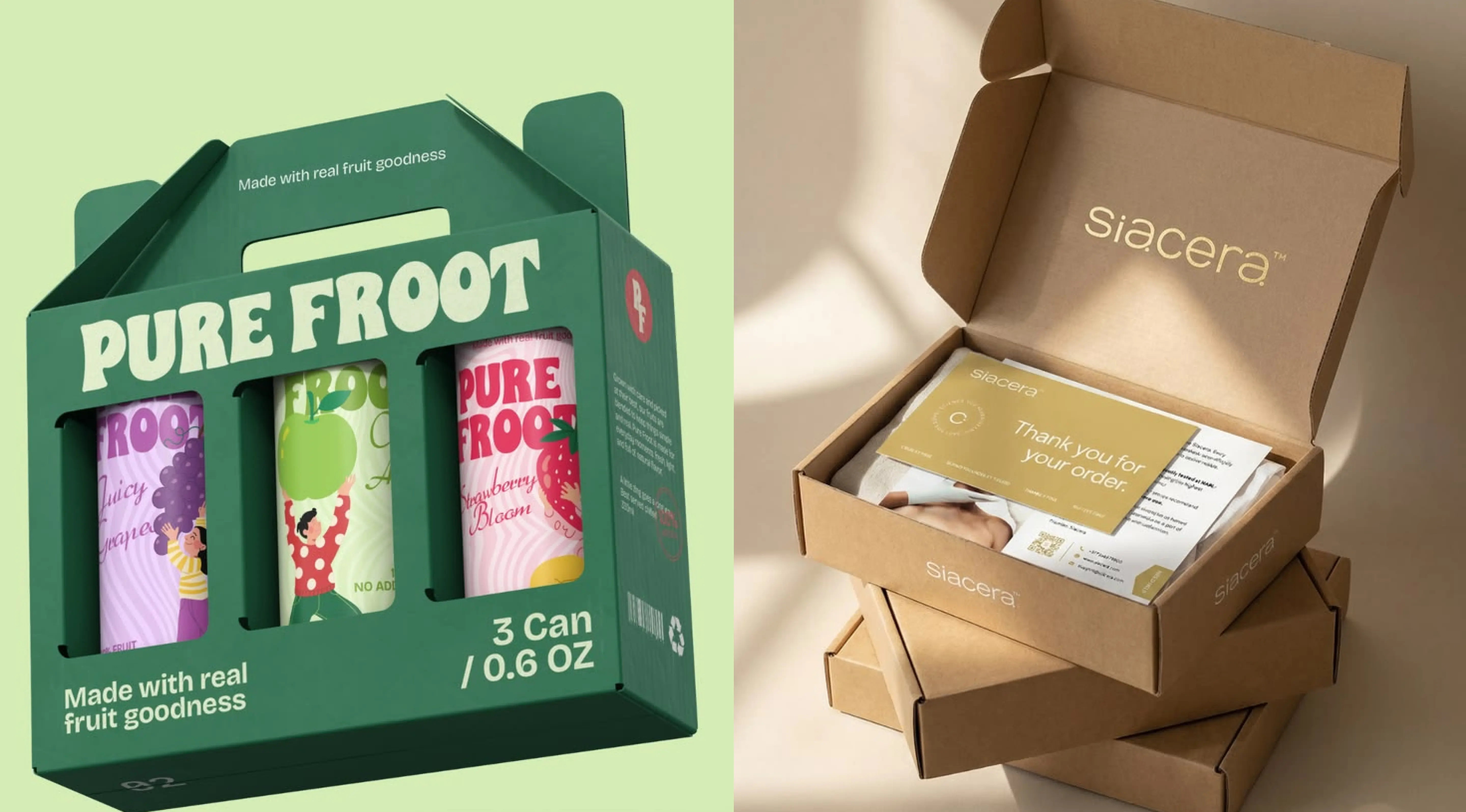
Retail packaging has to help create the purchase decision. A shopper may see several competing products together and spend only a few seconds deciding which one deserves attention. The packaging therefore needs to communicate quickly: what the product is, who it is for, why it is different, and why someone should pick it over the alternatives beside it.
Color, shape, typography, product claims, and front-of-pack hierarchy all influence this glance-and-grab moment. Effective shelf-ready packaging must work within the visual context of the category, not just look attractive when viewed by itself.
E-commerce packaging enters the journey differently. By the time the package arrives, the customer has already made the purchase. The job shifts from winning attention to reinforcing the decision and creating a memorable brand experience.
This is where DTC packaging design and unboxing experience design become important. The customer may first encounter a shipping box, then branded tissue, an insert, the product itself, and perhaps a thank-you message. Each layer can contribute to anticipation and perceived value.
E-commerce packaging may also be photographed or recorded for social content, making presentation and shareability more relevant.
So, retail packaging vs ecommerce packaging is not simply about designing two different boxes. Retail needs to win attention before purchase. E-commerce needs to make the experience after purchase feel considered, consistent, and worth remembering.
Retail packaging has to perform in a crowded environment. A design that looks distinctive in a presentation may disappear once it is placed beside ten competing products using similar colors, claims, shapes, and visual styles.
That makes category context one of the most important considerations in retail packaging vs ecommerce packaging.
Color and shape can help establish shelf recognition, but differentiation should be deliberate. Before designing, review the shelf neighbors. If every competitor uses the same category color, a different approach may create standout—but breaking category conventions too aggressively can also make the product harder to understand.
The goal is recognizable difference, not difference for its own sake.
Front-of-pack hierarchy is equally important. Shoppers should be able to understand the brand, product type, variant, and most important benefit without studying the pack. Strong shelf-ready packaging prioritizes information for quick scanning rather than giving every message equal visual weight.
Retail packaging must also work within practical retailer and category requirements. Pack dimensions can affect shelf placement and efficiency.
Barcodes need suitable placement and sufficient clear space for reliable scanning. Depending on the retailer and product category, there may also be requirements around shelf-ready packaging, case formats, labeling, merchandising, or how products are displayed and replenished.
These constraints should be considered during design rather than added after the visual direction is approved.
This is an important distinction in retail packaging vs ecommerce packaging. DTC packaging design can focus heavily on the experience after delivery, while retail packaging must first succeed within a competitive physical environment.
A strong retail pack therefore balances three priorities: visibility among shelf neighbors, fast communication at the front of pack, and practical compliance with the requirements needed to reach and remain on that shelf.
The priorities change significantly when comparing retail packaging vs ecommerce packaging. A retail pack needs to compete for attention before purchase, while an e-commerce package needs to protect an already-purchased product and create a strong experience when it arrives.
The first priority is shipping durability. DTC packaging design has to account for handling, stacking, movement, moisture exposure, and other conditions that can occur during transit. A visually impressive box has little value if it reaches the customer crushed, torn, or with the product damaged inside.
Structural strength therefore becomes part of the design process, not something considered after the graphics are finished. Box construction, material thickness, internal protection, product fit, and unnecessary empty space all influence how well the package travels.
The second priority is unboxing experience design. Instead of treating the package as one visual surface, consider the sequence in which customers discover the brand.
What do they see when the shipping box arrives? What appears when they open it? How is the product revealed? What is the final message before they remove the product?
This sequence can include branded interiors, tissue, inserts, product information, or thank-you cards. Each element should have a purpose rather than simply adding more packaging.
Shareability is another consideration. Well-planned DTC packaging design can create natural moments customers may want to photograph or include in unboxing videos. A thoughtful reveal, concise message, or distinctive insert can contribute to that experience.
The goal is not to over-design every layer. Strong unboxing experience design balances durability, brand recognition, presentation, and efficiency so the packaging feels considered from delivery to product reveal.
For brands selling through both physical stores and direct-to-consumer channels, retail packaging vs ecommerce packaging becomes less of an either-or decision. The challenge is creating a packaging system that performs effectively in both environments while still looking like one brand.
One option is a hybrid packaging system.
The primary product pack can be designed to work as shelf-ready packaging in retail while also fitting securely within a separate shipping format for online orders. The retail pack maintains strong front-of-pack hierarchy and shelf recognition, while the outer e-commerce packaging provides the structural protection and unboxing experience design needed for delivery.
Another approach is a dual-SKU packaging strategy. A brand may use one format for retail and another for DTC packaging design when the requirements of the two channels are too different to solve effectively with a single structure.
For example, retail may require compact dimensions, visible product information, barcode placement, and merchandising efficiency. E-commerce may allow a different structure with stronger transit protection, branded interiors, inserts, or a more controlled reveal.
The important part is maintaining one cohesive brand identity.
Both formats should share recognizable elements such as the logo system, color palette, typography, imagery, messaging style, and distinctive brand assets. The structure and information hierarchy can change without making the retail and online products feel like separate brands.
Brands should also consider future channel growth. If e-commerce is currently small but expanding quickly, packaging decisions should account for that rather than solving only today's retail requirements.
The strongest omnichannel approach to retail packaging vs ecommerce packaging is therefore consistency without forced uniformity. The two formats do not need to be identical. They need to perform their different jobs while remaining clearly connected through one flexible packaging and brand system.
Many packaging problems happen when brands treat retail and e-commerce as interchangeable environments. Understanding retail packaging vs ecommerce packaging helps prevent decisions that work well in one channel but create problems in the other.
The first common mistake is using retail packaging as shipping packaging without considering additional structural durability. Shelf-ready packaging is primarily designed for presentation, merchandising, and product protection within a retail environment. It may not be strong enough to handle repeated movement, stacking, and impacts during shipping.
For online orders, DTC packaging design should consider how the product will travel. This may require an additional shipping box, protective inserts, stronger materials, or a structure specifically developed for transit.
The second mistake is ignoring unboxing experience design. Some DTC brands treat the shipping box as purely functional, missing an opportunity to reinforce the brand after purchase. The solution does not need to involve excessive packaging. A branded interior, thoughtful product arrangement, simple insert, or well-planned reveal can make the experience more intentional.
The third mistake is inconsistent branding between retail and e-commerce-exclusive SKUs.
A product purchased online should still feel connected to the version customers recognize in stores. Different colors, typography, messaging, or visual systems can weaken recognition and make the range feel fragmented.
Retail packaging vs ecommerce packaging requires different structural and communication priorities, but not different brand identities.
The strongest approach keeps recognizable brand elements consistent while adapting the format to each channel. Shelf-ready packaging should perform at retail, while DTC packaging design should protect the product and support the delivery experience. Different jobs require different solutions, but customers should always recognize the same brand.
Is packaging design different for online vs. in-store products?
What is unboxing experience design?
Unboxing experience design refers to intentionally designing the sequence and presentation of a package's contents to create a memorable, shareable moment for the customer.
Do DTC brands need different packaging than retail brands?
DTC brands generally need packaging engineered for shipping durability and social shareability, whereas retail brands prioritize shelf visibility and compliance with retailer standards.
Can one packaging design work for both retail and e-commerce?