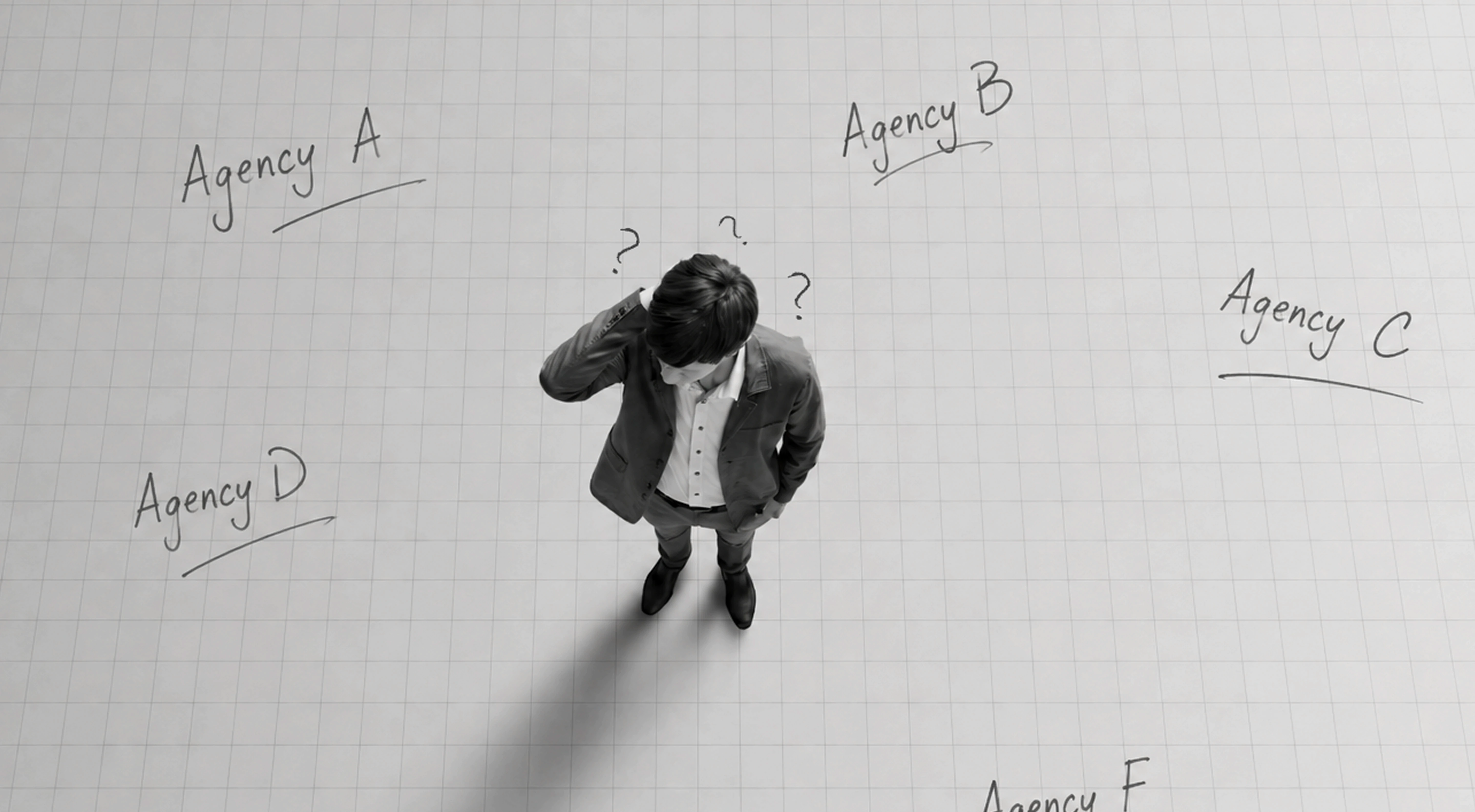

Before evaluating individual providers, it helps to understand how their service models differ.
Abstrct DDR
Model: Design subscription for recurring creative requirements.
Pricing: Confirm current DDR plans and included capacity.
Best suited for: Businesses seeking ongoing design support from an India-based creative partner.
Key consideration: Confirm active request limits, turnaround commitments, and service coverage.
Superside
Model: Managed creative subscription with access to different design capabilities.
Pricing: Custom or plan-based pricing; confirm current commercial terms.
Best suited for: Larger marketing teams with ongoing, multi-format creative requirements.
Key consideration: Budget commitments, service allocation, and collaboration processes.
Design Pickle
Model: Subscription-based creative production.
Pricing: Depends on the selected plan and services.
Best suited for: Marketing teams requiring recurring design execution.
Key consideration: Daily capacity, request complexity, and revision workflows.
Kimp
Model: Flat-fee design subscription with plan-dependent service coverage.
Pricing: Monthly subscription plans; confirm current rates.
Best suited for: Businesses needing regular graphics and potentially video support.
Key consideration: Active request limits and turnaround expectations.
ManyPixels
Model: Subscription-based design support with different service levels.
Pricing: Depends on the selected subscription.
Best suited for: Businesses with recurring graphic and digital design requirements.
Key consideration: Daily output capacity, designer allocation, and working-hour overlap.
Freelancer Collectives and In-House Designers
Model: Flexible external specialists or permanent employees.
Pricing: Project fees, retainers, or employment costs.
Best suited for: Businesses needing specialized expertise or consistent internal collaboration.
Key consideration: Availability, management responsibilities, and scalability.
These comparisons describe general service models rather than verified live quotations. Businesses should confirm current pricing, included services, and delivery commitments directly with each provider.
A design subscription is an ongoing service arrangement where businesses pay a recurring fee to access creative production.
Instead of requesting a separate quote for every social media post, banner, presentation, or brochure, clients submit design tasks through an agreed workflow.
The provider then completes those requests according to the subscription's capacity and service terms.
Does Unlimited Graphic Design Mean Unlimited Output?
Not necessarily.
The term unlimited graphic design often refers to the ability to submit unlimited requests or revisions, rather than receiving an unlimited number of completed designs simultaneously.
Most subscription models have practical production limits.
For example, a plan may allow unlimited requests in a queue but only one or two active tasks at a time.
Larger projects may also require multiple working days or be divided into smaller deliverables.
Before subscribing, businesses should clarify:
How many requests can be active simultaneously?
Are revisions included, and are there any restrictions?
What counts as one design request?
Are complex projects included or quoted separately?
How is work prioritized when several requests are pending?
Understanding these limits helps businesses estimate realistic monthly output.
What Makes Subscriptions Different From Project-Based Design?
Project-based design involves paying for a defined deliverable, such as a logo, brochure, or presentation.
A subscription provides recurring access to design production across an agreed range of services.
For businesses with consistent creative requirements, subscriptions can reduce repeated quotation and onboarding work.
However, companies with only occasional design needs may find individual projects more economical.
Choosing the right design subscription requires evaluating more than the advertised monthly price.
For this comparison, the providers are assessed using six practical criteria.
1. Pricing and Cost Predictability
We consider whether providers use fixed monthly fees, tiered subscriptions, or customized pricing.
The important question is how much usable design capacity the business receives for its spending.
2. Turnaround and Output Capacity
A structured workflow helps reduce misunderstandings and unnecessary revisions.
Ask the partner to explain the complete process, from receiving a brief to delivering final files.
Find out which information they need before starting and how they handle missing assets or unclear instructions.
Discuss how feedback should be shared, who consolidates comments, and how many revision rounds are included.
For example, your agency may prefer collecting client feedback internally and sending one consolidated revision request rather than forwarding comments individually.
The partner should be able to accommodate an agreed review process and clearly identify when requested changes fall outside the original scope.
Time-Zone Compatibility
For Indian teams, working-hour overlap can affect briefing, feedback, approvals, and urgent requests.
A provider's operating schedule matters alongside its geographic location.
4. Service Coverage
Some subscriptions focus on everyday graphic design, while others include presentations, motion graphics, video, UI/UX, or more specialized creative services.
5. Communication and Workflow
We consider how requests are submitted, how feedback is handled, and whether teams can collaborate through familiar tools.
6. Flexibility and Ownership
Cancellation terms, revision policies, source-file access, and intellectual property rights can affect the overall value of a subscription.
These criteria provide a practical framework for comparing services without assuming that the lowest advertised price represents the best option

Before choosing a design subscription service, ask providers the following questions:
How many design requests can be active simultaneously?
What is the typical turnaround for simple and complex tasks?
Which services are included, and which require additional payment?
Are revisions unlimited, or are there specific restrictions?
Will I work with a dedicated designer or a rotating team?
What working hours overlap with Indian Standard Time?
Are editable source files included in the subscription?
Who owns the completed designs and associated intellectual property?
Can I pause, upgrade, downgrade, or cancel the subscription?
What happens to unfinished requests when the subscription ends?
Request written clarification of important terms before making a payment.
Also consider testing the service with a representative project, where a paid trial or short-term arrangement is available.
A practical evaluation should focus on completed work, communication quality, and reliability rather than promotional promises.
For businesses exploring ongoing creative support, Abstrct Design's DDR offering is an option to consider alongside international design subscription services.
When evaluating DDR, review the available plans against your actual monthly requirements.
For example, a business primarily producing social media creatives may need a different arrangement from a company regularly requesting presentations, brochures, packaging, and digital assets.
Before selecting a plan, confirm the included services, production capacity, revision process, turnaround expectations, and commercial terms.
For India-based teams, working-hour alignment may also be an important consideration.
The goal is to select a design arrangement that provides dependable creative support without introducing unnecessary costs or management complexity.
Is 'Unlimited' Graphic Design Really Unlimited?
Usually, unlimited graphic design means you can submit unlimited requests or revisions within the provider's terms, while actual output remains limited by active task capacity, working hours, and project complexity.
How Much Does a Design Subscription Cost in India?
Design subscription pricing varies widely, from lower-cost monthly graphic design plans to enterprise services costing several thousand dollars per month, depending on creative capacity, service coverage, and provider.
Can I Pause or Cancel a Design Subscription?
Some providers allow monthly cancellation or subscription pauses, while others require longer commitments, so review the billing, renewal, and cancellation terms before subscribing.
Do Subscriptions Cover Motion and Video?
Some subscriptions include motion graphics and video editing, but these services may require a higher-tier plan or separate subscription.
What Is the Difference Between a Subscription and a Retainer?
Yes, motion graphics and packaging design can be white-labeled when the partner has the necessary expertise, tools, and production processes to deliver those services.
Who Owns the Designs?
Ownership depends on the provider's agreement, so confirm when intellectual property rights transfer and whether editable files, fonts, stock assets, and other third-party materials have separate licensing conditions.