
Before designing a logo or selecting packaging materials, jewellery businesses should establish how they want to be perceived.
Brand positioning defines the audience, product offering, price segment, and qualities that make the brand distinctive.
A clear position helps guide decisions about jewellery brand identity, photography, packaging, and communication.
Fine Jewellery vs Fashion Jewellery
Fine jewellery brands typically emphasize materials, craftsmanship, durability, heritage, or long-term ownership.
Their identity may use restrained typography, considered color palettes, and detailed product photography.
Fashion jewellery brands often focus on styling, accessibility, self-expression, and changing trends.
They may use more expressive colors, energetic imagery, and campaign-led communication.
Neither approach is inherently better.
The appropriate direction depends on the products, target customers, and intended market position.
Traditional vs Contemporary Jewellery
India has a rich jewellery-making heritage, with design traditions that vary across regions and communities.
Brands specializing in bridal, temple-inspired, or heritage jewellery may choose to communicate craftsmanship, cultural significance, and traditional artistry.
Contemporary jewellery brands may focus on minimal forms, everyday wear, versatility, or modern styling.
However, traditional jewellery does not always require ornate branding, and contemporary jewellery does not automatically require minimalism.
The visual identity should reflect the brand's specific point of view rather than follow category stereotypes.
Natural vs Lab-Grown Diamond Jewellery
Natural and lab-grown diamond brands may serve customers with different purchasing motivations.
Some customers prioritize natural origin, rarity, or established jewellery traditions.
Others may be interested in lab-grown diamonds because of design possibilities, price positioning, or product preferences.
Brand messaging should communicate these distinctions accurately.
For lab-grown diamond businesses, clear product identification and transparent information about origin, grading, and certification are particularly important.
A distinctive position should come from the brand's actual offering rather than broad claims about superiority or sustainability that cannot be substantiated.
A jewellery brand identity is the visual and verbal system that makes the business recognizable.
It includes the logo, typography, colors, imagery, graphic elements, and communication style.
For jewellery businesses, the identity must work across applications of very different sizes and materials, from tiny jewellery tags to large retail signage.
Logos and Monogram Systems
A jewellery logo should be distinctive, legible, and adaptable.
Some brands use a wordmark built around carefully selected typography. Others combine a wordmark with a symbol or monogram.
Monograms can be particularly useful because they offer a compact brand element for small applications.
They may appear on jewellery boxes, pouches, shopping bags, product tags, certificates, and digital profile images.
A flexible logo system can include:
A primary wordmark for standard brand communication.
A monogram or symbol for compact applications.
A secondary arrangement for different packaging proportions.
Single-color versions for embossing, engraving, and printing.
The logo should be tested at realistic sizes before approval.
Fine lines, intricate symbols, and very small lettering may become difficult to reproduce through foil stamping, debossing, or engraving.
A strong jewellery logo balances character with practical usability.
Colour, Materials and Finishes
Color plays an important role in establishing a jewellery brand's visual personality.
Deep tones may communicate formality or heritage, while lighter palettes can create a contemporary or understated appearance.
However, premium branding does not require black, gold, or other conventional luxury colors.
A distinctive palette that reflects the brand's positioning can be more recognizable than following familiar category conventions.
Material choices also influence how the identity is experienced.
Textured papers, fabric-covered boxes, matte surfaces, foil stamping, and embossed details can create different impressions.
For example, a contemporary silver jewellery brand may prefer soft neutral packaging with subtle typography, while a heritage-focused bridal brand may explore richer colors and more tactile materials.
Finishes should be selected based on the intended experience, production feasibility, and budget.
The goal is to create a consistent relationship between visual identity and physical materials.
Typography That Feels Premium Without Cliché
Typography has a significant influence on how jewellery branding is perceived.
Elegant serif typefaces are common in luxury categories, but they are not the only way to communicate sophistication.
A well-designed sans-serif system can feel equally refined when supported by thoughtful spacing, hierarchy, and composition.
The important consideration is how typography reflects the brand's personality.
A heritage jewellery brand may choose letterforms with a more traditional character, while a contemporary brand may prefer cleaner, simpler typography.
Readability remains essential across all applications.
Product specifications, material descriptions, pricing information, and care instructions should be easy to understand.
Avoid decorative fonts that become difficult to read at small sizes or create problems during printing.
A practical typography system should support both expressive brand communication and clear product information.
Together, these identity elements establish the foundation for a recognizable jewellery brand. They also guide how packaging, catalogues, retail environments, and digital experiences are designed as the collection grows.

Jewellery packaging is one of the most important physical expressions of a brand.
Unlike many everyday products, jewellery is often purchased for gifting, celebrations, or significant personal occasions. The packaging becomes part of that experience.
Thoughtful jewellery packaging design should protect the product, communicate the brand's identity, and create a presentation that feels appropriate to its value.
Packaging That Reflects Your Brand Position
Packaging should be developed around the brand's positioning rather than simply following luxury design trends.
For example, a heritage jewellery brand may explore textured materials, traditional design details, and rich colors.
A contemporary jewellery brand may prefer restrained graphics, subtle finishes, and minimal typography.
The objective is to create a packaging experience that feels connected to the jewellery collection.
Every element, from the outer box to the interior lining, should support the same visual direction.
Choosing the Right Packaging Materials
Material selection affects appearance, durability, production costs, and the customer's experience.
Common jewellery packaging options include:
Rigid boxes for structured product presentation and protection.
Velvet or fabric-lined interiors for cushioning delicate jewellery.
Paperboard packaging for lightweight collections and certain gifting applications.
Fabric pouches for storage, protection, and compact presentation.
Textured papers, foil stamping, and embossing for distinctive finishing details.
Premium packaging does not always require expensive materials.
A simple box with accurate construction, quality printing, and thoughtful proportions can create a refined impression.
Choose materials based on the product's requirements, the intended customer experience, and practical manufacturing considerations.
Designing the Complete Unboxing Experience
The unboxing experience includes more than the jewellery box itself.
Shopping bags, protective sleeves, care cards, certificates, thank-you notes, and storage pouches may all contribute to the presentation.
These elements should feel like parts of the same brand system.
For example, a jewellery care card can use the brand's typography and colors while providing clear cleaning and storage instructions.
Similarly, a certificate or product information card should prioritize accuracy and readability rather than decorative design.
Avoid adding unnecessary inserts that increase packaging costs without improving the customer experience
Balancing Luxury With Practicality
Jewellery packaging must also perform a functional role.
It should protect delicate products during storage, handling, and transportation.
Consider the dimensions of different jewellery types, including rings, earrings, necklaces, bracelets, and larger sets.
A single packaging structure may not suit every product.
For brands selling online, shipping protection is especially important.
The final packaging system should balance visual appeal, durability, storage efficiency, and production costs.
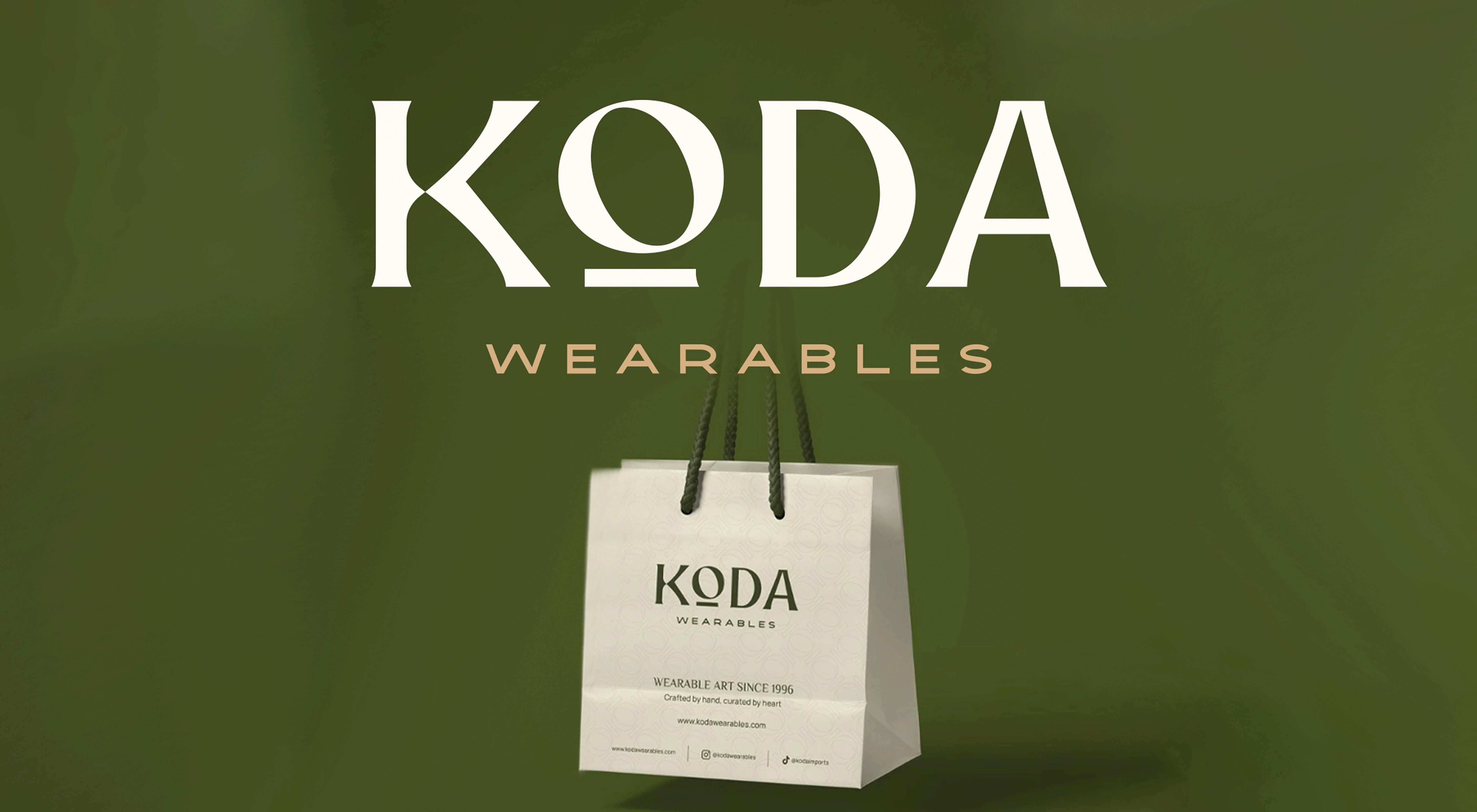
Koda Jewelry provides a useful reference for understanding how jewellery branding can bring together visual identity, packaging, and collection presentation.
For jewellery businesses, the challenge is not simply creating an attractive logo. It is developing a consistent visual language that supports the products and communicates the brand's intended position.
A jewellery brand identity should work across different applications, from small packaging details to large-format catalogues and digital campaigns.
Building a Recognizable Identity
A jewellery brand needs an identity that complements its collections without competing with them.
For a brand such as Koda Jewelry, the important considerations include logo clarity, typography, color selection, and the flexibility of the identity across different formats.
A well-developed system should support applications such as jewellery boxes, shopping bags, product tags, catalogues, and digital content.
The goal is to create recognition through consistent design rather than excessive decoration.
Connecting Identity With Packaging
Packaging provides an opportunity to translate a jewellery brand's visual identity into a physical experience.
Logo placement, box proportions, material finishes, and typography should feel connected to the overall brand.
For Koda Jewelry, these are useful considerations when evaluating how the identity can extend into packaging applications.
A coordinated system can help create a consistent experience across individual purchases, gifting occasions, and larger collections.
Presenting Collections Through Catalogues
Catalogues and lookbooks should allow jewellery products to remain the focus.
Clear product photography, organized layouts, readable information, and consistent typography help customers explore collections.
For Koda Jewelry, a collection presentation can be evaluated through how effectively it balances product visibility with brand expression.
The broader lesson for jewellery businesses is that identity, packaging, and catalogues should not be treated as unrelated design projects.
They work best when developed as parts of one coordinated brand system.
Before launching a new jewellery brand or refreshing an existing identity, review the following essentials.
Have you clearly defined your target audience?
Is your brand positioned around a specific product category, design philosophy, or customer need?
Can customers understand what differentiates your collections?
Does your communication accurately reflect your materials, craftsmanship, and product offering?
Is your logo distinctive and readable across different sizes?
Do you have a monogram or secondary logo for compact applications?
Are your colors and typography consistent?
Can your identity be reproduced through printing, embossing, and other finishing techniques?
Have you documented basic brand guidelines?
Does your packaging reflect the intended brand positioning?
Are boxes and inserts suitable for different jewellery types?
Have you considered materials, finishes, protection, and manufacturing costs?
Are care instructions and relevant product documents included where appropriate?
Does the unboxing experience feel consistent with the brand?
Is your product photography accurate and consistent?
Are collections organized into clear categories?
Can customers easily find product names, reference codes, and specifications?
Does the catalogue use the established visual identity?
Have you considered whether printed, digital, or both catalogue formats are necessary?
Does your website reflect the same identity as your packaging?
Are showroom signage and display materials consistent?
Do social media posts and advertisements follow recognizable visual guidelines?
Are product descriptions and customer-facing policies clear?
Can the identity support new collections without requiring a complete redesign?
A jewellery branding checklist helps identify gaps before they become expensive inconsistencies.
It also provides a practical foundation for future collection launches and brand expansion.
Building a jewellery brand involves connecting product design, positioning, visual identity, and customer experience.
Whether you are launching a new collection, entering a different market, or refreshing an established business, the branding process should begin with understanding your products and audience.
At Abstrct Design, relevant creative services include brand identity, packaging design, print design, and digital design.
These services can help jewellery businesses develop a more coordinated visual presence across packaging, catalogues, marketing materials, and digital touchpoints.
The appropriate scope depends on your existing identity, collection size, customer segment, and business objectives.
For some brands, improving packaging and product presentation may be sufficient. Others may benefit from developing a more comprehensive identity system.
The aim is to create branding that reflects your collection, communicates its intended value, and remains consistent as the business grows.
How Do I Make My Jewellery Brand Look Premium?
Start with clear positioning, a distinctive logo, refined typography, consistent product photography, and packaging materials that reflect your brand's identity. Premium presentation depends on thoughtful execution rather than expensive finishes alone.
What Should Jewellery Packaging Include?
Jewellery packaging should include suitable product protection, clear branding, and relevant product information, with care instructions, certificates, or storage pouches added where appropriate.
Do Jewellery Brands Still Need a Printed Catalogue
Consider rebranding when your positioning, audience, or product offering has significantly changed, or when your existing identity no longer communicates your business effectively.
How Do Lab-Grown Diamond Brands Stand Apart?
Lab-grown diamond brands can differentiate themselves through distinctive designs, clear positioning, transparent product information, and consistent customer experiences rather than relying on generic claims about affordability or sustainability.
How Much Does Jewellery Branding Cost?
Jewellery branding costs vary depending on the scope of work, including identity design, packaging development, catalogue design, photography, and digital applications. A defined project brief is the best starting point for obtaining an accurate quotation.